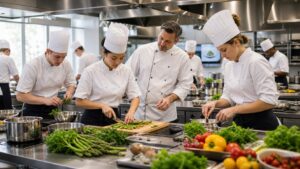
Culinary School Insights is where the real journey into the kitchen begins—not the glossy TV version, but the intense, exhilarating, skill-sharpening reality that transforms passionate food lovers into confident culinary professionals. This is the backstage pass to the world students live every day: the clatter of knives against cutting boards, the quick-fire teamwork of a bustling training kitchen, and the constant push to master technique, timing, and taste. Whether you’re dreaming of enrolling, already comparing programs, or simply fascinated by how chefs are made, this section brings you inside the experience. Explore how foundational skills are built dish by dish, discover the surprising challenges students face, learn what separates great schools from the rest, and uncover the career paths that open once the apron goes on. From first-day jitters to graduation triumphs, from culinary science to creative plating, Culinary School Insights gathers the stories, strategies, and lessons that shape tomorrow’s chefs. If culinary ambition lives in you—even just a spark—this is where it gets fed.
A: Not always. Passion, basic knife comfort, and any food-related work or volunteer experience are helpful but not mandatory.
A: Certificates can be under a year, while associate and bachelor’s programs range from 18 months to four years.
A: Most core programs include both, though you can specialize in pastry or baking if that’s your focus.
A: It can be, especially if you use the network, externships, and business training—not just the recipes.
A: Line cook, pastry assistant, private chef, caterer, food stylist, test kitchen cook, and more.
A: Many programs now include modules on nutrition, allergies, and plant-based or gluten-free cooking.
A: Expect long hours standing, lifting, and moving quickly in hot kitchens—it’s demanding but manageable with care.
A: Many students do, but schedules can be tight. Evening or weekend restaurant work is common.
A: Accreditation, instructor experience, externship partners, facilities, and graduate outcomes matter most.
A: Practice knife skills, read foundational cookbooks, and get comfortable with basic sauces and egg cookery.