Famous Chefs Who Revolutionized Modern Cooking
Famous Chefs Who Revolutionized Modern Cooking is for readers who want more than a fame ranking. Chef influence is easiest to misunderstand when it is measured only by television appearances, awards, or reservation demand. The better question is what changed because a chef had a platform: how cooks train, how menus read, how diners value regional food, how suppliers are treated, and how restaurants imagine hospitality.
A: Only when attention leads to lasting changes in food, teams, sourcing, teaching, or access.
A: Awards can be useful context, but the current meal and the restaurant's values matter more.
A: Former staff, copied techniques, changed diner expectations, and stronger supply relationships are all strong signs.
A: Yes. Casual rooms often reveal whether a chef's standards work without luxury signals.
A: Compare the problems they solved in their own time, not only the style of food they served.
A: Not automatically. Media becomes serious when it teaches, credits sources, and supports real restaurant work.
A: Coherence, consistency, staff knowledge, sourcing choices, and whether the meal has a point of view.
A: Yes. Teaching, writing, mentoring, and changing technique can matter as much as expansion.
A: A famous name on the door without evidence that the team and food still carry the standard.
A: Respect the chef, but remember the restaurant is always bigger than one person.
Why This Chef Conversation Matters Now
Famous Chefs Who Revolutionized Modern Cooking is not only a list of famous names. It is a way to understand how restaurants change when public chefs gain enough influence to move diners, investors, publishers, suppliers, and young cooks at the same time. The modern chef is part craftsperson, part teacher, part operator, and part cultural signal. That mix can produce real progress when the attention is used to improve food, labor, sourcing, and access.
For curious diners and cooks who want to understand how modern restaurants got here, the useful question is not which chef has the loudest profile. It is which chefs changed what people expect from a meal. famous chefs who revolutionized modern cooking matters because it turns celebrity into evidence: better kitchens, sharper menus, wider representation, smarter business models, or new respect for regional cooking that used to be treated as secondary.
Influence Starts Before the Dining Room
Chef influence begins with decisions diners rarely see. A chef chooses suppliers, training systems, prep standards, menu language, pricing logic, and the tone of service before the first guest arrives. When those choices spread, they reshape how other restaurants behave. technique, menu architecture, kitchen organization, and the courage to break old rules becomes visible in the plate, but it is built in the purchasing meeting, the staff meal, the test kitchen, and the quiet correction during service.
This is why the most meaningful chef stories are bigger than personal charisma. Charisma can fill a room once. Systems keep a restaurant good when the chef is not standing at the pass. The chefs worth studying are the ones whose ideas survive translation into teams, cookbooks, school programs, television, casual concepts, and independent restaurants opened by former staff.
What Diners Can Learn From Chef-Led Restaurants
Diners can read a chef-led restaurant by looking for coherence. The menu should feel edited rather than crowded. The food should show a point of view without making guests feel lectured. The service should understand the kitchen’s priorities, not simply recite ingredients. When a chef’s influence is healthy, the meal feels confident and generous at the same time.
That does not mean every chef-driven restaurant needs luxury trappings. Some of the most important chef work happens in casual rooms, bakeries, counter-service concepts, pop-ups, hotel restaurants, and community projects. nouvelle cuisine, molecular ideas, farm-driven cooking, open kitchens, and chef-owned groups show that influence can travel through many formats. A chef changes dining most when the idea works beyond one expensive room.
The Difference Between Fame and Contribution
Fame measures attention. Contribution measures change. A chef may be famous because of television, awards, social media, or a restaurant empire, but contribution asks a deeper question: what became different because this chef cooked, taught, hired, wrote, organized, or took a risk? That distinction helps readers avoid confusing visibility with value.
Contribution can be technical, cultural, economic, or ethical. One chef might refine modern tasting menus. Another might expand respect for a regional cuisine. Another might prove that a more humane kitchen can still be ambitious. Another might build pathways for cooks who were previously kept out of leadership. The most interesting chef stories often combine several kinds of contribution.
How Chefs Shape What Restaurants Buy
Influential chefs can change the supply chain. When they demand better vegetables, heritage grains, sustainable seafood, whole-animal butchery, or careful fermentation, suppliers respond. Smaller restaurants may then gain access to ingredients or techniques that were once niche. Diners experience the change as flavor, but the deeper shift is economic.
This influence carries responsibility. A chef with public power can lift farmers, fishers, bakers, potters, and specialty producers, or they can turn those partners into decorative talking points. The stronger model gives credit, pays fairly, and builds long-term relationships. The best chef narratives include the people behind the ingredients, not just the person at the pass.
Media Can Amplify or Flatten the Work
Television, streaming, social media, podcasts, and cookbooks can help diners understand a chef’s ideas. They can also flatten those ideas into personality. The healthiest chef media gives context: why a technique matters, where a dish comes from, how a kitchen works, and what tradeoffs a restaurant faces. The weakest version turns food into spectacle without accountability.
For readers, the practical move is to treat media as an entry point, not a verdict. Watch the show, read the profile, save the recipe, then look for how the chef’s work performs in real restaurants and real communities. A public image becomes more useful when it leads back to food, labor, and hospitality.
What Young Cooks Notice
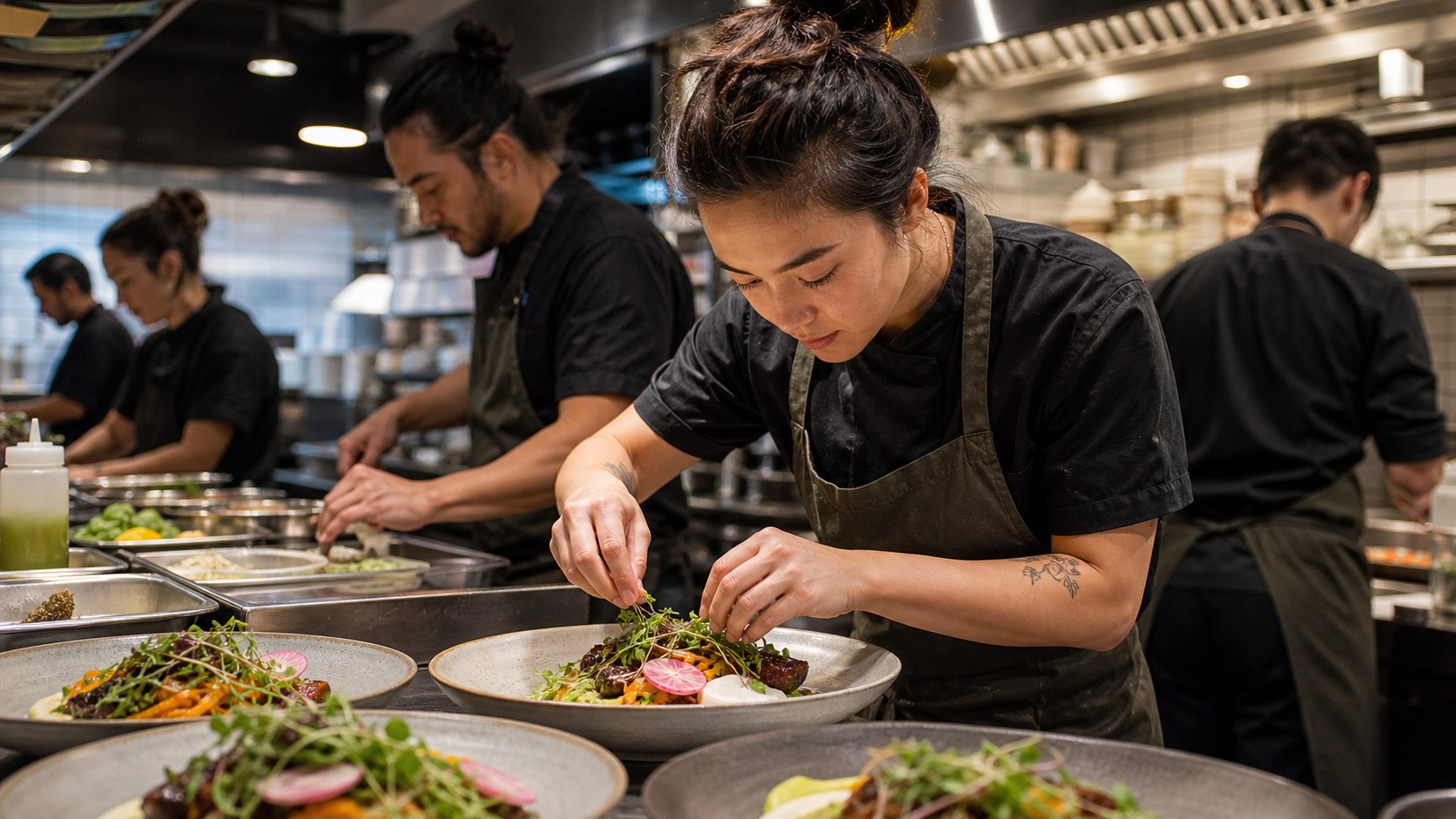
Young cooks study influential chefs differently than diners do. They notice station discipline, menu editing, mentorship, career pathways, and whether the chef’s values survive a busy Saturday night. A chef can inspire from a distance, but the real test is what happens to people who work inside the system. Do they learn? Do they grow? Do they leave stronger?
This is where chef influence becomes generational. Former staff open restaurants, change hiring habits, carry techniques to new cities, and reinterpret lessons through their own backgrounds. The chef at the center may get the headline, but the larger story is the network of cooks who transform an idea into a wider dining movement.
How to Judge a Chef’s Legacy
A chef’s legacy should be judged across time. One brilliant restaurant matters, but consistency, adaptation, mentorship, and honest evolution matter more. The dining world changes quickly. Chefs who keep learning, credit collaborators, and revise their own assumptions tend to leave sturdier legacies than chefs who only protect a fixed image.
Legacy also belongs to diners. When readers support restaurants that cook thoughtfully, credit sources, and build better teams, they help decide which kinds of chef influence survive. The most useful takeaway from Famous Chefs Who Revolutionized Modern Cooking is not worship. It is sharper attention to the people and systems that make a meal worth remembering.
The Practical Takeaway
The best way to use chef fame is as a map, not a monument. Let a chef’s reputation point you toward a cuisine, a technique, a city, a cookbook, a restaurant group, or a set of values. Then keep asking what the food actually does. Does it feed people well? Does it teach something? Does it improve the industry around it?
When the answer is yes, chef influence becomes more than celebrity. It becomes part of how restaurants get better. That is the version of famous chefs who revolutionized modern cooking worth following: not the loudest story, but the one that changes what cooks can imagine and what diners learn to value.
The Reader’s Best Lens
The best way to read Famous Chefs Who Revolutionized Modern Cooking is through results rather than aura. A chef’s public image may bring you to the subject, but the durable lesson is in what diners, cooks, and restaurant owners can actually use. Look for changed habits: guests ordering unfamiliar dishes with more confidence, young cooks seeing a path into leadership, and operators treating sourcing or staff culture as part of the restaurant’s identity rather than a backstage detail.
That lens keeps the conversation practical. Famous Chefs Who Revolutionized Modern Cooking should help curious diners and cooks who want to understand how modern restaurants got here understand why a restaurant feels different from the one that came before it. If the only answer is publicity, the influence is shallow. If the answer includes technique, access, mentorship, or a better way to explain food, the chef’s impact becomes easier to respect.
What Happens After the Signature Dish
Signature dishes are useful because they give a chef’s work a clear entry point. They can also trap the conversation. A chef who changes dining usually has more to offer than one plate. The deeper story is how the kitchen thinks: how it handles vegetables, how it balances richness and acidity, how it trains cooks to taste, and how it decides which traditions deserve protection or revision.
For Famous Chefs Who Revolutionized Modern Cooking, the signature dish should be treated as the door, not the house. Once readers step through it, they can see the operating logic behind the food. That is where technique, menu architecture, kitchen organization, and the courage to break old rules becomes meaningful. The dish may be beautiful, but the system behind it is what other restaurants learn from.
Why Teams Belong in the Story
Chef culture often gives one person the spotlight, but restaurants are collective achievements. Pastry chefs, sous-chefs, prep cooks, porters, servers, sommeliers, farmers, fishers, designers, and managers all help turn an idea into a meal. The more famous the chef, the more important it becomes to remember the team, because public attention can erase the labor that makes influence possible.
The strongest chef-led restaurants usually have visible trust inside the team. Service understands the food. Cooks move with purpose rather than fear. Managers protect the guest experience without flattening the kitchen’s personality. When that alignment appears, celebrity feels less like branding and more like leadership.
How Influence Reaches Home Cooks
Chef influence does not stop at restaurant doors. It reaches home kitchens through cookbooks, interviews, pantry habits, knife skills, fermentation projects, weeknight sauces, vegetable treatment, and the confidence to taste while cooking. A chef may never cook for most readers directly, but their ideas can still change how those readers shop, season, and think.
This matters because restaurant culture and home cooking constantly feed each other. Diners who understand a chef’s approach become better guests. Home cooks who learn why a dish works become more curious diners. The loop makes famous chefs who revolutionized modern cooking relevant even for people who may never book the most famous table.
The Long View
The final measure is whether the work still matters after the attention shifts. Restaurants close, media cycles move, and dining trends change language. But a chef’s strongest ideas can remain in the culture: a new respect for a cuisine, a better standard for training, a technique that becomes common, or a business model that helps other restaurants survive.
That long view is generous but demanding. It lets chefs grow beyond one moment while still asking whether the work holds up. For Famous Chefs Who Revolutionized Modern Cooking, the most useful conclusion is simple: celebrate the chef, study the system, and let the meal prove the reputation.
What to Remember
The practical memory from Famous Chefs Who Revolutionized Modern Cooking is that chef influence should make dining more intelligible, not more intimidating. Follow the names that help you taste with more attention, understand restaurants with more sympathy, and recognize the teams behind memorable meals. When celebrity, craft, and responsibility meet, famous chefs who revolutionized modern cooking becomes a useful guide rather than a distraction.