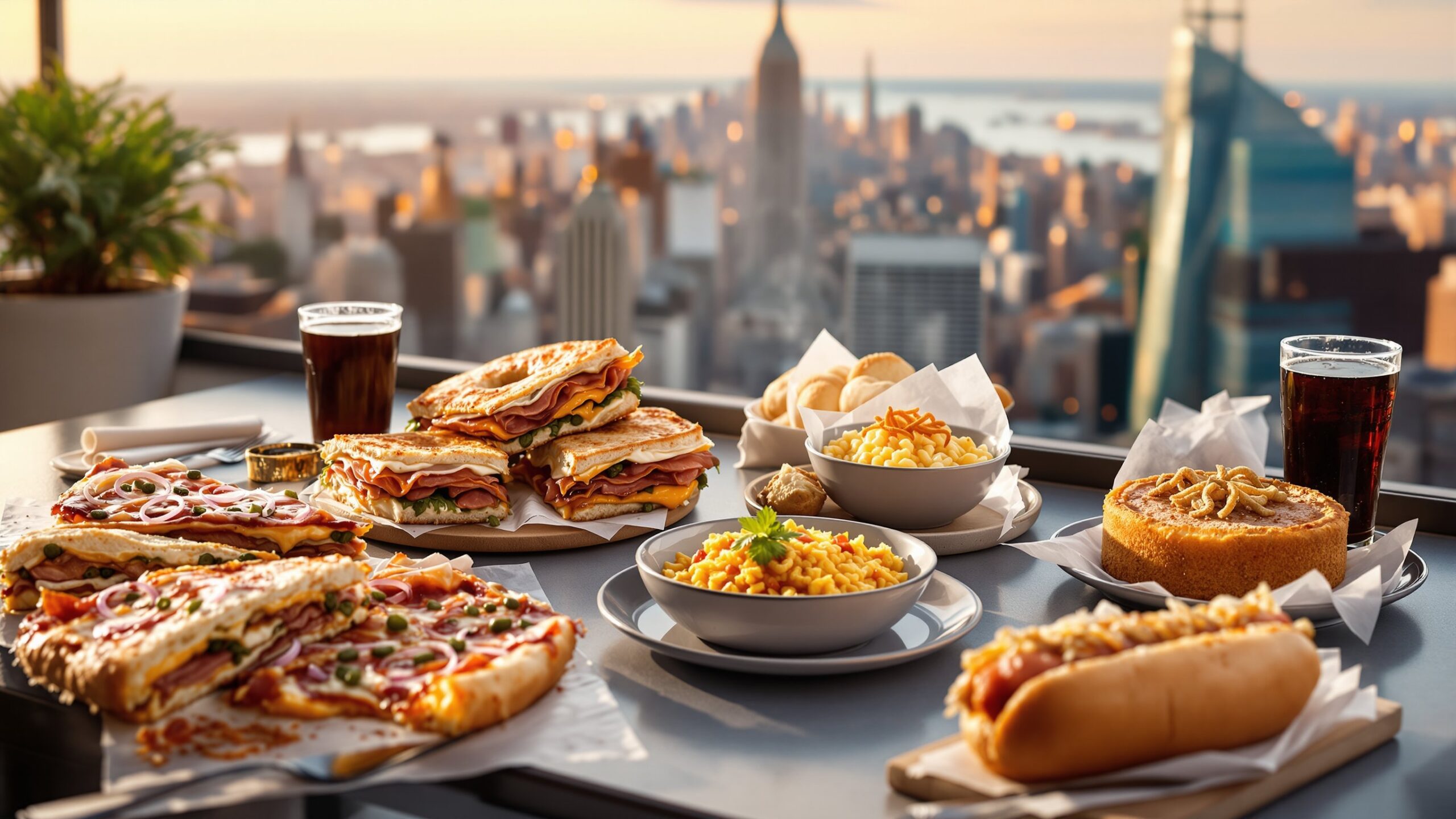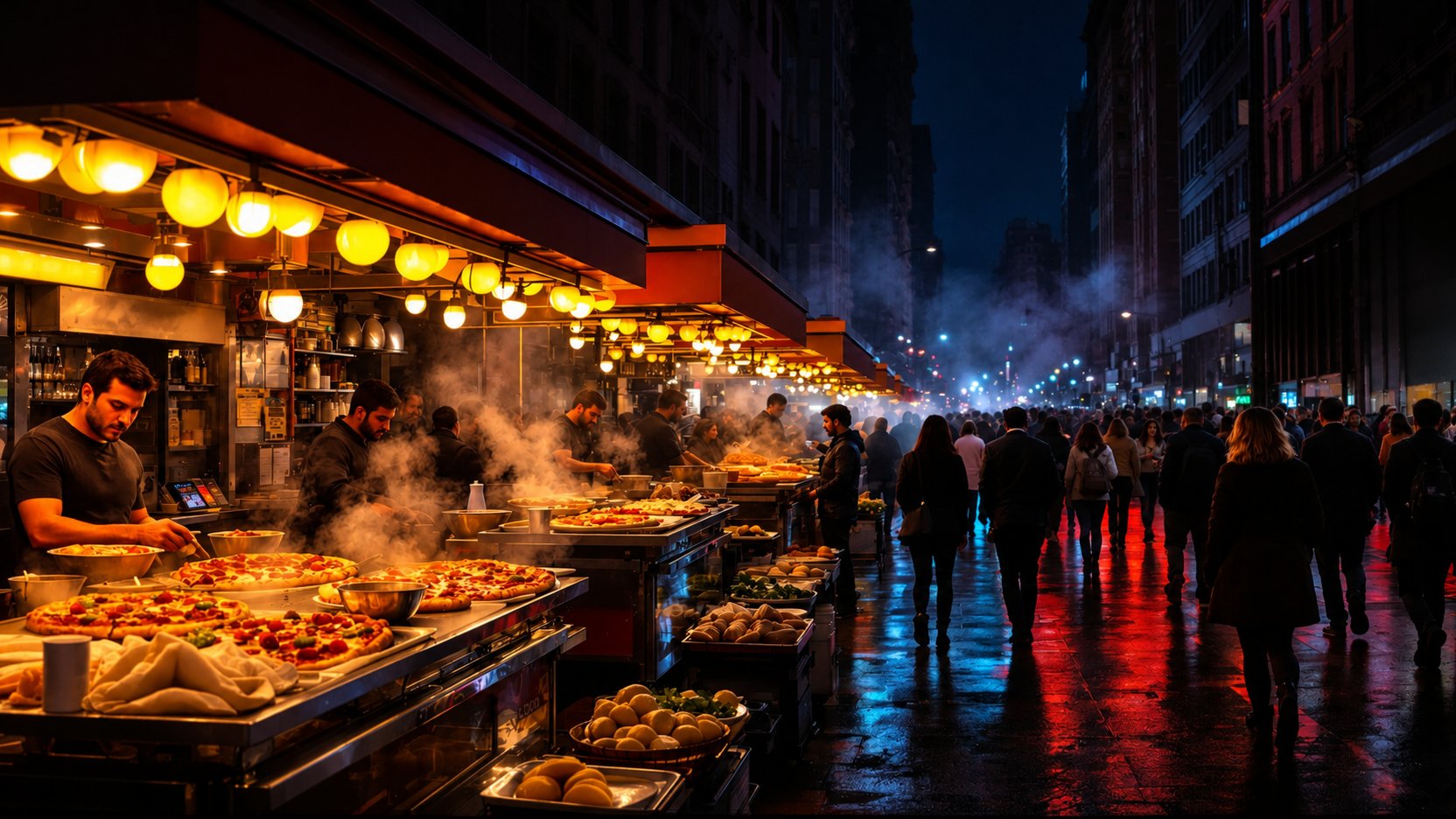
New York City is one of the world’s greatest food capitals, but its true culinary heartbeat lives on the sidewalks, tucked beneath glowing subway tracks, beside crowded parks, and on busy avenues where steam rises from carts late into the night. Street food in New York is not simply fast food. It is culture, immigration, history, survival, creativity, and ambition served in paper trays, wrapped in foil, or handed through tiny service windows to hungry crowds. Every borough tells a different story through food, and every block seems to offer a new flavor worth chasing. For first-time visitors, New York street food can feel overwhelming in the best possible way. The city never stops moving, and neither does its food scene. One minute you are eating a classic hot dog near Times Square, and the next you are standing in line in Queens for Tibetan momos or hunting down a late-night halal platter in Manhattan. The beauty of New York street food is that some of the city’s most unforgettable meals cost less than a sit-down appetizer elsewhere. This New York street food guide explores the iconic foods, legendary neighborhoods, famous vendors, hidden gems, and unforgettable flavors that define the city’s street food culture. Whether you are visiting for the first time or returning for another culinary adventure, these are the foods and locations that belong on every serious NYC food itinerary.
A: Hot dogs, pizza slices, soft pretzels, and halal cart platters are the classics.
A: Midtown for halal carts, Chinatown for dumplings, and Lower East Side for old-school bites.
A: It can be affordable, especially compared with sit-down restaurants, though prices vary by location.
A: Chicken or lamb over rice with white sauce, hot sauce, salad, and pita.
A: Not always; carts are great for classics, while trucks often offer more specialized or creative menus.
A: A bodega sandwich made with chopped ground beef, melted cheese, lettuce, tomato, and condiments.
A: Lunch and early evening are ideal because turnover is high and food is usually fresh.
A: Yes—falafel, veggie dumplings, fruit cups, pretzels, pizza, and some taco options are common.
A: Queens is especially famous for its global street food diversity.
A: Avoid empty carts in busy areas, unclear pricing, and food that has been sitting too long.
Why New York Street Food Is So Famous
Street food in New York evolved alongside the city itself. Waves of immigrants arriving from Europe, Latin America, the Middle East, Asia, and the Caribbean brought recipes, cooking traditions, and family food culture with them. Many newcomers started businesses with carts, kiosks, and small food stalls because they were affordable ways to build a future in America.
Over time, those humble operations became legendary institutions. Some vendors now attract tourists from around the world, while others remain neighborhood secrets known mainly by locals. Together, they create one of the most diverse street food scenes on Earth.
Another reason New York street food became iconic is convenience. New Yorkers are always moving. Workers grab breakfast from carts before catching trains. Students eat slices of pizza while walking to class. Nightlife crowds line up for halal platters at 2 a.m. Street food is woven into the city’s daily rhythm.
Unlike traditional restaurant dining, street food also offers immediate cultural access. You can taste authentic recipes from dozens of countries in a single afternoon without ever leaving the city.
The Classic New York Hot Dog
No food represents New York street culture more than the hot dog. It is simple, inexpensive, nostalgic, and deeply tied to the city’s identity. The classic New York hot dog is typically served from stainless steel carts scattered across Manhattan and beyond. Vendors usually offer mustard, sauerkraut, onions in tomato sauce, and sometimes spicy relish. One of the most legendary spots is Nathan’s Famous in Coney Island. Founded in 1916, it helped define the city’s hot dog tradition. Eating a hot dog on the Coney Island boardwalk while hearing waves crash nearby is a true New York experience.
In Midtown Manhattan, hot dog carts remain everywhere around Central Park, Times Square, and major subway stations. While some carts cater mainly to tourists, others have loyal local followings and decades of history behind them. The best strategy is simple: find a busy cart with steady turnover. Freshness matters. A properly grilled or steamed New York hot dog paired with a cold drink on a warm afternoon captures the spirit of the city better than many expensive restaurant meals.
The Legendary Halal Cart Scene
Modern New York street food would not be complete without halal carts. These carts became wildly popular in the 1990s and early 2000s, serving filling platters of seasoned chicken, lamb, or falafel over rice with salad, pita bread, and famous white sauce.
The most iconic name is The Halal Guys. What started as a small cart became an international phenomenon. Long lines often form late into the night as visitors wait for overflowing platters covered in white sauce and fiery red sauce.
Yet the halal cart world extends far beyond one famous vendor. Some of the city’s best carts are neighborhood operations in Queens, Brooklyn, and Upper Manhattan. Jackson Heights in Queens is especially known for excellent halal food representing South Asian and Middle Eastern communities.
The magic of halal carts lies in the balance of flavors. Smoky meat, fragrant rice, crisp lettuce, warm pita, tangy sauce, and spicy heat combine into one satisfying meal that feels uniquely New York.
Pizza by the Slice
Technically, many pizza shops are not street vendors, but pizza slices are essential to New York street food culture. The city’s famous foldable slices are designed for eating while walking through crowded streets. The classic New York slice features a thin crust with a crisp underside and flexible center. Cheese stretches with every bite, while tomato sauce delivers rich flavor without overpowering the crust.
Legendary slice destinations include Joe’s Pizza in Greenwich Village and Prince Street Pizza in SoHo. Joe’s is known for traditional slices, while Prince Street Pizza became famous for thick pepperoni squares with crispy edges.
Pizza in New York is more than food. It is part of city life. Office workers grab slices during lunch breaks. Tourists eat while sightseeing. Students survive on affordable late-night pizza runs. A hot slice on a cold New York evening feels almost ceremonial.
Pretzels from Street Carts
The oversized soft pretzel is another classic New York street snack. These salty, chewy pretzels appear throughout the city, especially near parks, subway stations, and tourist attractions.
Served warm with mustard, they provide quick comfort food during long days of walking. While simple, a fresh New York pretzel eaten outdoors somehow tastes better than it would anywhere else.
The aroma alone often draws hungry pedestrians toward carts. On winter days, the warmth of a soft pretzel in your hands becomes part of the experience.
The Rise of Food Trucks in NYC
While traditional carts remain central to New York’s food culture, modern food trucks transformed the scene during the last two decades. Many chefs began experimenting with gourmet street food concepts, bringing restaurant-quality creativity onto the streets.
Today, food trucks serve everything from Korean tacos to lobster rolls and artisanal grilled cheese sandwiches. Some trucks move daily between neighborhoods, while others develop cult followings through social media.
Popular gathering areas for food trucks include Midtown Manhattan, Brooklyn’s waterfront districts, and events across the city. Smorgasburg, the famous outdoor food market in Brooklyn, became a launchpad for many successful street food businesses.
Food trucks represent New York’s constant evolution. Traditional street foods still thrive, but innovation never stops.
Chinatown: A Street Food Paradise
Few neighborhoods rival Manhattan’s Chinatown when it comes to affordable and unforgettable street food. The area is packed with bakeries, dumpling shops, barbecue windows, and tiny takeaway counters serving authentic Chinese cuisine.
One of the most beloved stops is Xi’an Famous Foods, famous for hand-pulled noodles and spicy cumin lamb dishes inspired by western Chinese cuisine.
Dumplings are another Chinatown essential. Steamed or fried pork dumplings served fresh for just a few dollars remain one of the city’s best bargains. Roast duck hanging in restaurant windows and pork buns steaming behind glass counters add to the neighborhood’s sensory overload.
Walking through Chinatown feels like entering a different world. The sounds, smells, signs, and flavors create one of the richest food experiences in New York.
Queens: The Most Diverse Food Borough
If Manhattan introduces visitors to New York street food, Queens reveals its full global depth. Often considered the most ethnically diverse urban area in the world, Queens offers an unmatched variety of cuisines.
Jackson Heights is especially famous for South Asian, Tibetan, Nepali, and Latin American street food. Vendors sell momos, birria tacos, arepas, kebabs, samosas, and countless regional specialties. Roosevelt Avenue becomes a food adventure after dark. Grills smoke on sidewalks while vendors serve dishes from Ecuador, Colombia, Mexico, Bangladesh, and beyond.
Astoria offers incredible Greek and Middle Eastern foods, while Flushing rivals some of the best Chinatowns anywhere outside Asia. Food lovers serious about exploring New York’s culinary diversity eventually find themselves spending entire days eating through Queens neighborhoods.
Tacos and Latin American Street Food
New York’s taco scene exploded over the last decade. While Los Angeles may dominate taco conversations nationally, NYC developed its own outstanding taco culture through Mexican immigrant communities in Queens and Brooklyn.
Jackson Heights, Corona, and Sunset Park are excellent areas for authentic tacos. Vendors prepare fresh tortillas, grill marinated meats, chop onions and cilantro at lightning speed, and serve intensely flavorful tacos late into the night.
Birria tacos became especially popular across the city, with rich consommé dipping sauces turning simple tacos into social media sensations. But traditional al pastor, carnitas, lengua, and barbacoa remain the backbone of New York taco culture.
Street corn, pupusas, empanadas, and arepas also play major roles in the city’s Latin American food landscape.
Bagels as Street Food
Although bagel shops are technically storefronts, bagels function as everyday New York street food. Locals often grab them quickly before work and eat them while commuting or walking through the city.
A classic New York bagel with cream cheese remains iconic, but smoked salmon combinations elevate the experience further. Freshly baked bagels possess a chewy texture and glossy exterior that New Yorkers fiercely defend as superior to bagels anywhere else.
Famous destinations include Ess-a-Bagel and Russ & Daughters.
Morning walks through Manhattan often include the scent of fresh bagels drifting from busy shops packed with locals ordering coffee and breakfast sandwiches.
Sweet Street Food Treats
New York’s dessert street food scene deserves attention too. Churros, roasted nuts, ice cream trucks, cheesecake slices, bubble tea, and Italian ice vendors appear throughout the city.
One particularly beloved treat is the warm roasted nuts sold from sidewalk carts. The sugary cinnamon aroma fills entire intersections during colder months.
In Little Italy and parts of Brooklyn, cannoli and gelato vendors remain popular. Chinatown bakeries offer egg tarts, sesame balls, and sponge cakes perfect for quick snacks.
Food markets also introduced trendy dessert innovations, including extravagant cookies, rolled ice cream, mochi donuts, and artisanal pastries.
The Magic of Late-Night Eating
New York may be the city that never sleeps, but it is also the city that never stops eating. Some of the best street food experiences happen after midnight when restaurants close and hungry crowds spill into the streets.
Halal carts become gathering points for nightlife crowds. Pizza shops remain packed. Taco vendors continue grilling under glowing lights while subway trains rumble nearby.
Late-night street food captures New York’s energy perfectly. The city feels raw, alive, chaotic, and communal all at once. Strangers stand shoulder to shoulder eating from paper plates while steam rises into the cold night air.
For many visitors, those late-night meals become the memories they talk about most after returning home.
Food Markets Worth Visiting
Beyond individual carts and trucks, New York offers famous food markets where visitors can sample multiple street-style dishes in one place. Smorgasburg became one of America’s most influential outdoor food markets, featuring dozens of vendors every weekend. Creative food concepts often debut there before expanding into permanent businesses.
Chelsea Market blends indoor food stalls with artisan vendors and attracts visitors seeking everything from tacos to lobster rolls. The holiday markets during winter also create fantastic seasonal food experiences, serving hot cider, pastries, sausages, and international comfort foods beneath festive lights.
Tips for Enjoying NYC Street Food
Exploring New York street food successfully requires curiosity and flexibility. The best meals are not always the most famous ones. Sometimes the unforgettable experience comes from a small vendor with a line of local customers.
Busy carts usually signal freshness and quality. Carrying cash can help, although many vendors now accept cards and mobile payments. Comfortable walking shoes are essential because the best food adventures often involve multiple neighborhoods.
Visitors should also embrace spontaneity. Some of the city’s greatest food discoveries happen unexpectedly while wandering side streets or following delicious smells through crowded avenues.
Street food is meant to be immediate and exciting. It is not about perfection or luxury. It is about energy, flavor, culture, and connection.
The Future of New York Street Food
New York street food continues evolving alongside the city itself. New immigrant communities constantly introduce new flavors and traditions. Younger chefs experiment with fusion concepts while preserving authenticity and heritage. Social media transformed how vendors build audiences, allowing once-hidden operations to become global sensations overnight. Yet despite modernization, the soul of New York street food remains unchanged. It is still about hardworking people serving affordable, flavorful meals to a fast-moving city. It is still about diversity and creativity colliding on busy sidewalks. And it is still one of the most exciting ways to experience New York like a local.
Final Thoughts
New York street food is far more than quick meals between attractions. It is one of the city’s greatest cultural treasures. Every hot dog cart, taco stand, dumpling counter, halal truck, and pizza shop contributes to the living story of New York itself.
The city’s street food scene reflects generations of immigration, ambition, adaptation, and culinary passion. It offers visitors the chance to taste the world without ever leaving the five boroughs.
For travelers seeking the real New York, the answer is not always hidden inside luxury restaurants or expensive tasting menus. Sometimes it is found standing on a crowded corner holding a hot slice of pizza, eating dumplings in Chinatown, or sharing a late-night halal platter beneath glowing city lights.
New York street food captures the city at its most authentic, flavorful, and unforgettable.