How to Train Restaurant Staff for Exceptional Customer Service
How to Train Restaurant Staff for Exceptional Customer Service is written for restaurant managers, trainers, owners, and service leads building repeatable guest-service standards. The goal is practical: turn training restaurant staff for service that feels warm, consistent, observant, and operationally realistic into daily restaurant habits that staff can feel during service and guests can feel at the table.
A: Most restaurants need several shifts of structured training plus ongoing coaching after the employee begins taking tables alone.
A: Scripts can help beginners, but staff should practice natural language that matches the restaurant and guest.
A: Choose trainers who are patient, consistent, respected, and able to explain why standards exist.
A: Use examples, role-play, guest scenarios, and coaching around timing, tone, and awareness.
A: Watch greetings, pacing, table maintenance, recovery, teamwork, menu confidence, and handoffs.
A: Yes, through guest comments, return visits, secret shops, manager observations, and service-error patterns.
A: Give specific language, practice in small steps, and let confidence build through repetition.
A: Unclear standards, poor staffing, weak communication, and managers who only appear when guests complain.
A: Yes, because timing, allergies, modifications, and plate consistency all affect the guest experience.
A: Retrain whenever the menu, service model, staffing level, or complaint pattern changes.
Service Training Needs Observable Standards
Exceptional customer service is not just a personality trait. It is a set of observable behaviors that can be taught, practiced, corrected, and repeated. Staff need to know what a strong greeting sounds like, how often to check a table, how to recover a mistake, and when to bring in a manager.
Training becomes stronger when it replaces vague ideals with examples. A new server should not have to guess what attentive means in this restaurant. The team should be able to describe it in actions that fit the concept, price point, and guest expectations.
For restaurant managers, trainers, owners, and service leads building repeatable guest-service standards, the practical test is whether the idea changes behavior when the dining room is moving fast. A standard that only works on a quiet afternoon is not yet a restaurant standard; it has to be simple enough for managers to coach and visible enough for staff to repeat.
That is why training restaurant staff for service that feels warm, consistent, observant, and operationally realistic should be connected to scheduling, station setup, handoffs, training, and accountability. Culture and service improve when the system gives people fewer reasons to guess.
A manager can start by choosing one observable behavior for the week and watching it across several shifts. That keeps improvement focused and prevents the team from feeling buried under a dozen new expectations at once.
Service leaders should also revisit training after employees work alone for a few shifts. That is when real questions appear, and a timely check-in can prevent small uncertainty from becoming a permanent habit.
Teach the Guest Journey
Service training should follow the guest journey from arrival to goodbye. The host sets the tone. The server reads the table. The kitchen affects pacing. Bussers and runners maintain rhythm. The manager appears before a concern becomes a complaint. Every role shapes the experience.
When staff understand the whole journey, they stop seeing their tasks as isolated. A delayed greet affects drink timing. A missed allergy note affects trust. A rushed check drop affects the final memory. Training should connect those moments so employees see the chain.
Leaders should also separate symptoms from causes. A tense employee may need correction, but the deeper issue could be unclear assignments, a broken station, inconsistent sections, or a manager who lets the same problem return every week.
The restaurant should decide who owns the follow-up before the shift ends. Without ownership, even a smart idea becomes another conversation that staff remember as unfinished.
Restaurants with strong service cultures treat guest language as a shared craft. Staff practice concise descriptions, graceful apologies, and confident boundaries until the words feel natural.
Practice Warmth Without Scripts
Scripts can help beginners, but they can also flatten hospitality. Guests can feel when language is memorized and disconnected from the table. Staff should practice useful phrases, then learn how to adapt them naturally.
The goal is not theatrical charm. The goal is warmth that feels appropriate to the guest. A celebration table, a quiet solo diner, a nervous first date, and a business lunch may all need different levels of conversation and pace.
The best restaurants make this work feel normal rather than dramatic. They build small habits, repeat them often, and let staff see that the new standard is not a temporary campaign that disappears after one meeting.
Guests rarely know which internal habit protected their experience. They simply feel that the room is calmer, the answers are clearer, and the staff seem more confident with one another.
Staff buy-in improves when managers explain the business reason and the human reason together. People can respect a standard more easily when it protects both the guest experience and the employee experience.
Training should include what not to do as well as what to do. Knowing when to step back, stop talking, or bring a manager can protect the guest experience as much as a warm greeting.
Build Menu Confidence Through Tasting
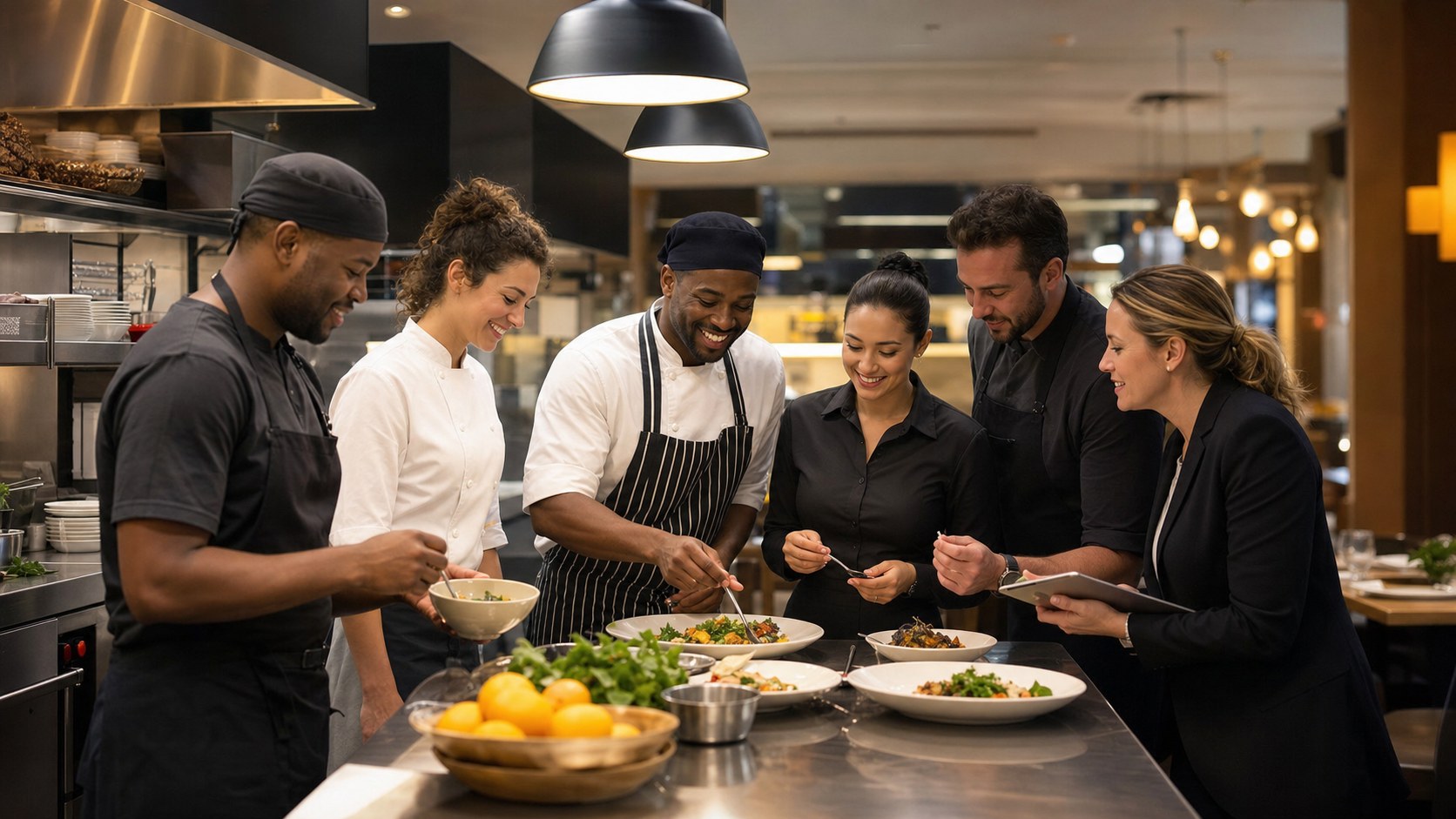
Menu knowledge becomes service confidence when staff taste food and discuss it out loud. Reading ingredients from a menu is not enough. Servers should know texture, richness, spice, portion feel, common substitutions, and which guests might love or avoid a dish.
Tastings also build respect between kitchen and floor. Cooks can explain intent, while servers can explain guest questions. That exchange makes menu language more accurate and improves the guest’s trust in recommendations.
Managers should ask what support the standard requires. If an employee is expected to communicate earlier, the restaurant may need cleaner pre-shift notes, better POS buttons, clearer station ownership, or permission to call for help before the problem becomes visible.
Small tests are often better than sweeping announcements. Try the change on a few services, ask what broke, and refine it before presenting the practice as settled policy.
Train Recovery Before Problems Happen
Service recovery should be trained before a plate is late or a guest is upset. Staff need to know how to apologize, what they can fix independently, when to involve a manager, and how to follow back after the solution. Without training, employees either overpromise or freeze.
A good recovery is calm, specific, and coordinated. The guest should not have to retell the problem to three people. The kitchen should know whether a refire is urgent. The manager should understand the size of the issue before arriving at the table.
A useful practice also needs a recovery plan. Restaurants are human systems, so someone will forget, rush, misunderstand, or resist the change. The manager’s job is to bring the team back to the standard without turning every miss into a crisis.
This is where consistency matters. When staff know the response will be fair, they are more likely to admit problems early and less likely to protect themselves with silence.
The same idea may need different handling by role. A host, bartender, line cook, server, and dishwasher all touch service from different angles, so training should translate the standard into each station’s reality.
Use Role-Play Carefully
Role-play can feel awkward, but it works when scenarios are realistic and brief. Practice a late entree, a wine question, an allergy concern, a dissatisfied regular, or a guest who wants to linger when the next reservation is approaching. These moments are easier to handle after staff have heard themselves say the words.
Managers should keep the tone constructive. The point is not to embarrass employees. The point is to let them build muscle memory before a real guest is waiting for an answer.
Documentation can help, but it should not replace leadership. A checklist, training note, or written standard gives the team a reference point; the daily proof still comes from what managers notice, correct, praise, and follow up.
Managers should watch for unintended consequences. A rule meant to improve speed may create sloppy handoffs, while a rule meant to improve warmth may slow tables if staffing is too thin.
Coach During Real Service
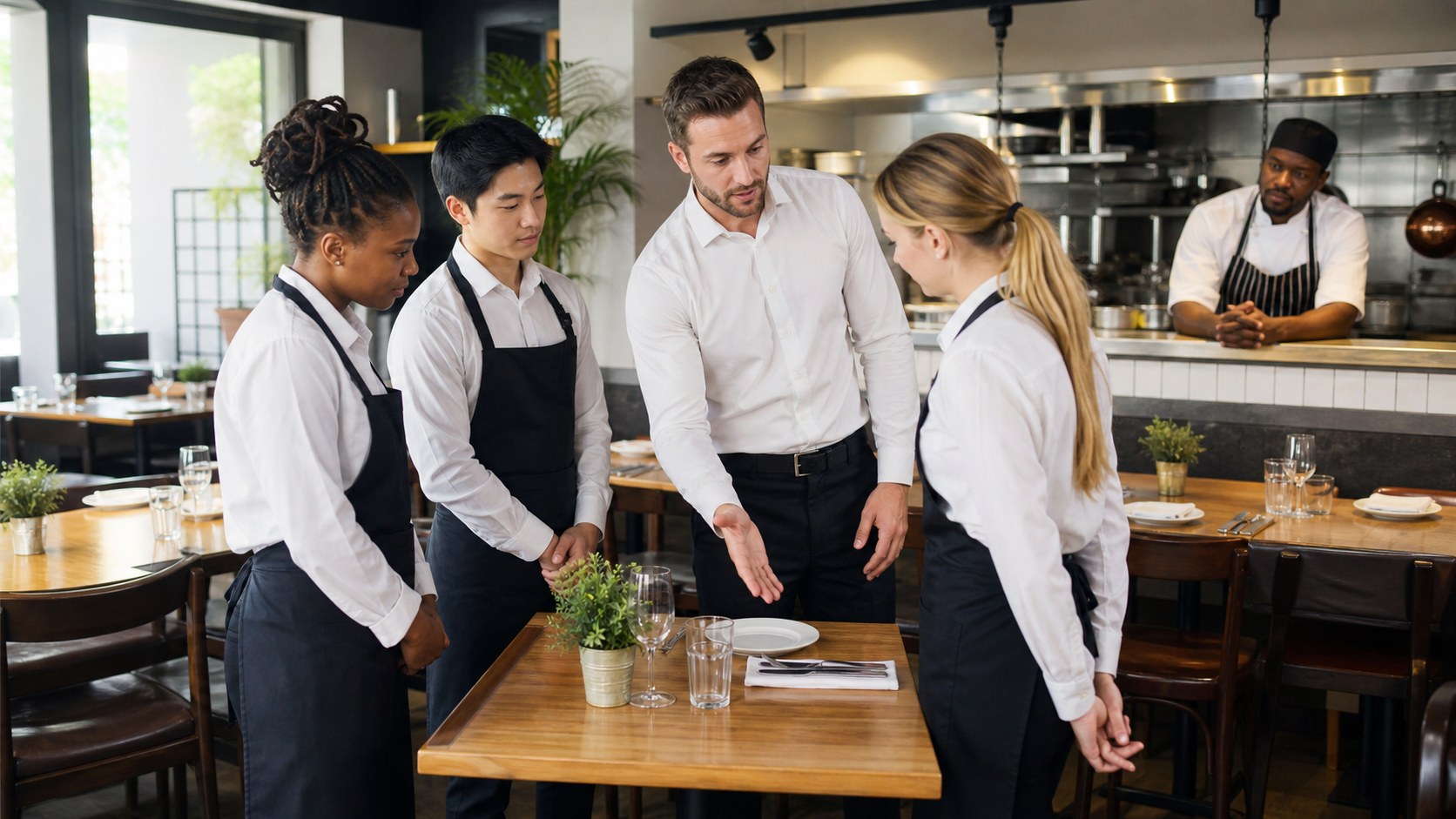
Training does not end when shadow shifts end. Managers should observe real service and coach specific moments: a missed greet, a strong recovery, a table that needed more space, or a handoff that prevented confusion. Small corrections close to the moment are easier to remember.
The best coaching is not constant criticism. It includes praise for behavior the restaurant wants repeated. When staff know what they did well, they can repeat it under pressure.
Restaurants should also protect the emotional load of the work. Hospitality requires patience with guests, speed under pressure, and cooperation with people who may be equally tired. Strong systems reduce the amount of willpower staff need to spend just to get through service.
When the work feels more organized, employees have more room to be generous. That generosity is often what guests remember.
When the team improves, name the change plainly. Staff need to hear that their effort produced fewer guest complaints, smoother turns, faster recovery, or a calmer close.
Include Every Service Role
Customer service is not only the server’s responsibility. Hosts manage first impressions and pacing. Bussers protect table quality. Runners communicate food details. Bartenders manage timing and mood. Kitchen staff protect accuracy and allergies. Training should include every role that touches the guest experience.
When only servers are trained, gaps appear at the edges. A perfect table interaction can still be damaged by a cold greeting, a missing side, a slow reset, or unclear allergy communication.
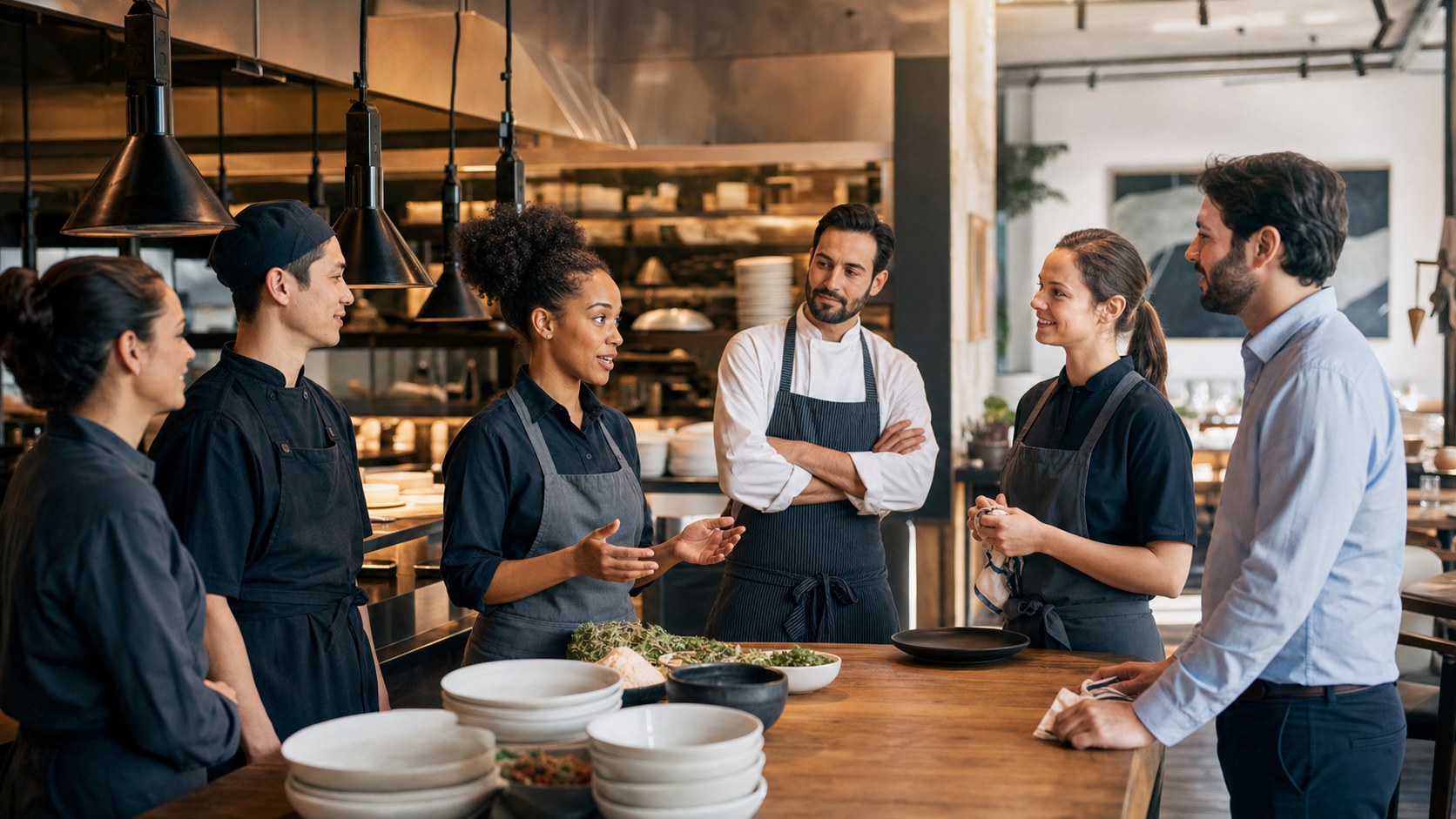
One helpful approach is to review the topic during a manager meeting and during a staff pre-shift. Managers can decide what they will enforce, while staff can explain where the standard might break down in real service.
The practice should also survive leadership changes. If only one manager understands it, the standard is fragile; if trainers and leads can explain it, the restaurant has a stronger foundation.
Create a Trainer Standard
Restaurants often choose trainers because they are strong employees, but skill and teaching are not the same thing. Trainers need patience, consistency, and the ability to explain why a standard exists. Otherwise, every new hire receives a different version of the restaurant.
A trainer checklist helps, but it should not become paperwork without coaching. Managers should watch trainers, ask new hires what remains unclear, and adjust the program when the same gaps repeat.
Progress should be reviewed with evidence. Look for fewer repeated errors, cleaner handoffs, better guest comments, steadier training outcomes, and fewer avoidable conflicts. These signals show whether training restaurant staff for service that feels warm, consistent, observant, and operationally realistic is becoming part of the operation.
If the evidence is weak, adjust the system rather than blaming the team immediately. A good restaurant learns from friction before it hardens into turnover.
Guest-facing results should be reviewed alongside staff-facing results. A policy that pleases guests while exhausting employees will not last, and a policy staff like must still support service.
Review Complaints as Training Data
Guest complaints can be painful, but they are useful training data when handled carefully. A pattern of rushed service, unclear menu answers, or missed refills may reveal a training issue rather than an individual failure. The goal is to identify what needs to be taught differently.
Exceptional service becomes possible when training is continuous. Restaurants change menus, staff, seasons, reservation patterns, and guest expectations. The training system has to keep moving with the dining room.
The final measure is sustainability inside the workplace. A practice is valuable only if managers can keep teaching it, employees can keep using it, and guests benefit without the staff feeling squeezed by another unrealistic promise.
Over time, these habits compound. Restaurants rarely improve culture or retention through one dramatic fix; they improve because many small decisions begin pointing in the same direction.