Restaurant Team Building Ideas That Actually Work
Restaurant Team Building Ideas That Actually Work is written for hospitality leaders who need practical team-building ideas that improve service instead of feeling forced. The goal is practical: turn using restaurant team-building practices that strengthen trust, communication, skill sharing, and daily cooperation into daily restaurant habits that staff can feel during service and guests can feel at the table.
A: Restaurants need team building tied to timing, communication, pressure, and handoffs, not generic office activities.
A: Small exercises can happen weekly, while larger activities should be occasional and clearly useful.
A: If attendance is required, staff should be paid according to applicable labor rules.
A: A cross-department tasting and service walkthrough is practical, low-cost, and immediately useful.
A: Keep activities specific, short, voluntary when possible, and connected to real service improvements.
A: It can reduce misunderstanding, but managers still need direct accountability for disrespectful behavior.
A: Owners can attend when they listen more than they dominate.
A: Digital tools can support scheduling or quizzes, but relationship building still happens in daily service.
A: Schedule activities around their availability and ask them about bottlenecks that affect the whole house.
A: Look for smoother handoffs, fewer repeated errors, better tone, and more staff suggestions.
Useful Team Building Starts With the Work
Restaurant team building works best when it improves the next shift. Staff do not need generic games that ignore the reality of service. They need activities that build trust, clarify handoffs, improve menu confidence, and make departments understand one another.
The best ideas are practical enough to survive tired feet and tight schedules. They respect the fact that restaurant employees have already spent hours performing hospitality. Team building should feel useful, not like another performance.
For hospitality leaders who need practical team-building ideas that improve service instead of feeling forced, the practical test is whether the idea changes behavior when the dining room is moving fast. A standard that only works on a quiet afternoon is not yet a restaurant standard; it has to be simple enough for managers to coach and visible enough for staff to repeat.
That is why using restaurant team-building practices that strengthen trust, communication, skill sharing, and daily cooperation should be connected to scheduling, station setup, handoffs, training, and accountability. Culture and service improve when the system gives people fewer reasons to guess.
A manager can start by choosing one observable behavior for the week and watching it across several shifts. That keeps improvement focused and prevents the team from feeling buried under a dozen new expectations at once.
The most useful activities also create shared memory. When a team has practiced a difficult handoff together, the next real version feels less personal and more solvable for everyone involved during real service that night, especially under pressure.
Start With Shared Tastings
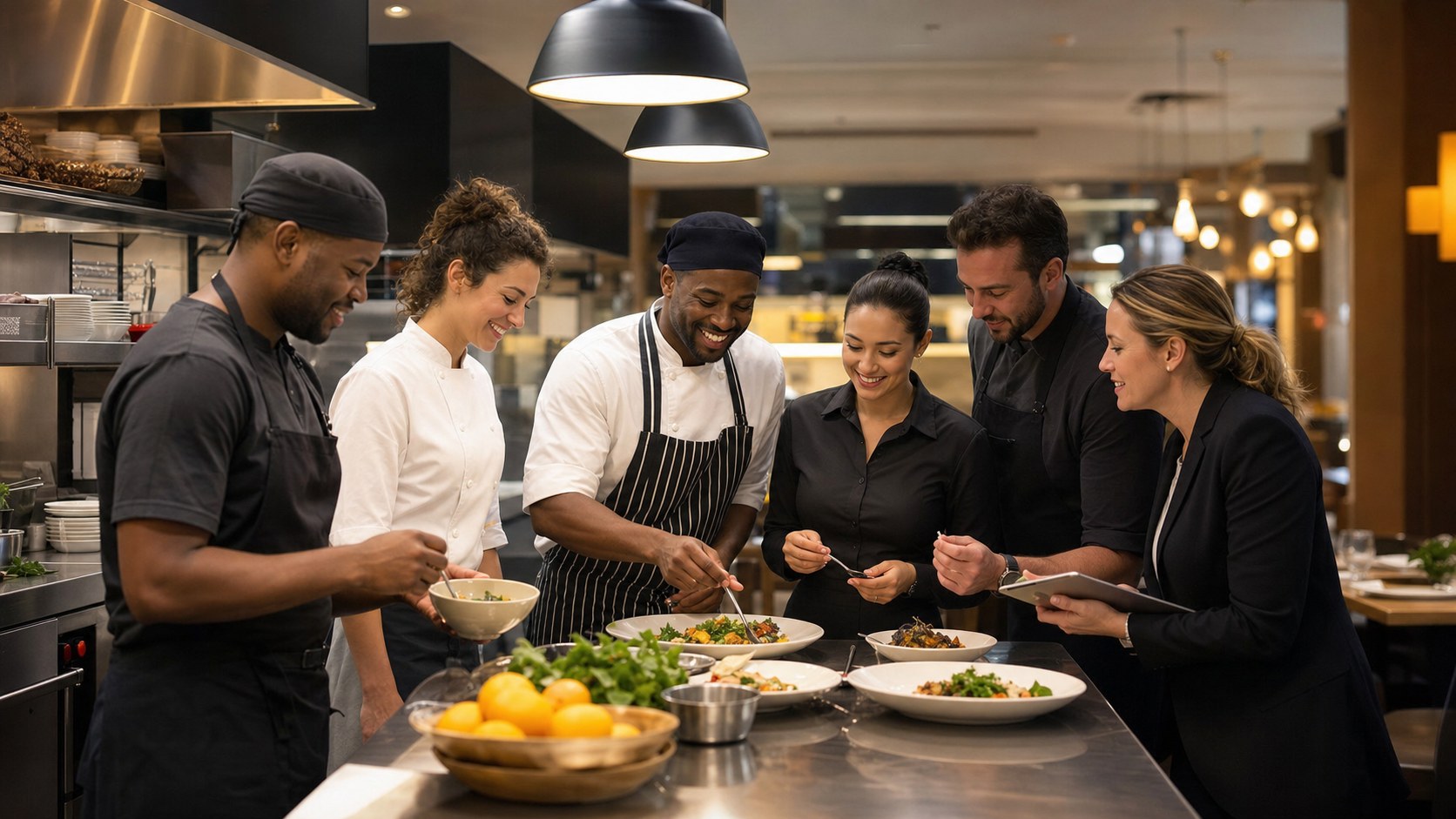
A shared tasting is one of the simplest team-building tools in a restaurant. Cooks explain dishes, servers practice guest language, bartenders suggest pairings, and hosts learn what guests may ask about. The activity is short, relevant, and connected to revenue.
Tastings also create respect. Front-of-house staff understand the craft behind the plate, while kitchen staff hear the questions guests actually ask. That exchange can reduce tension during service because both sides have more context.
Leaders should also separate symptoms from causes. A tense employee may need correction, but the deeper issue could be unclear assignments, a broken station, inconsistent sections, or a manager who lets the same problem return every week.
The restaurant should decide who owns the follow-up before the shift ends. Without ownership, even a smart idea becomes another conversation that staff remember as unfinished.
Managers should avoid measuring success by enthusiasm alone. A quiet team-building exercise can be successful if it makes the next allergy handoff cleaner or the next station reset smoother.
Map a Difficult Order
One useful exercise is to map the journey of a difficult order. Start with the guest request, then trace the host note, server entry, kitchen modification, expo communication, runner delivery, and manager follow-up. The team can see exactly where confusion enters the system.
This kind of activity avoids blame because the focus is the path, not one person. Staff often discover that the problem was a missing handoff, unclear button, rushed verbal note, or assumption that another role had the information.
The best restaurants make this work feel normal rather than dramatic. They build small habits, repeat them often, and let staff see that the new standard is not a temporary campaign that disappears after one meeting.
Guests rarely know which internal habit protected their experience. They simply feel that the room is calmer, the answers are clearer, and the staff seem more confident with one another.
Staff buy-in improves when managers explain the business reason and the human reason together. People can respect a standard more easily when it protects both the guest experience and the employee experience.
Team building becomes stronger when it includes repair. After a rough service, a short structured review can help the staff understand what happened without turning frustration into blame.
Use Cross-Department Shadow Moments
Full cross-training can be disruptive, but short shadow moments can build empathy quickly. A server can watch the pass during a rush. A cook can observe a host managing a wait. A bartender can explain timing to a runner. Each moment helps employees understand pressure outside their own station.
The goal is not to make every person interchangeable. The goal is to reduce the careless comments that come from not understanding someone else’s job. Respect grows when staff can see the real constraints behind another role’s choices.
Managers should ask what support the standard requires. If an employee is expected to communicate earlier, the restaurant may need cleaner pre-shift notes, better POS buttons, clearer station ownership, or permission to call for help before the problem becomes visible.
Small tests are often better than sweeping announcements. Try the change on a few services, ask what broke, and refine it before presenting the practice as settled policy.
Make Feedback Safe and Specific
Team-building activities can fail when feedback becomes a blame session. Managers should keep the format simple: what happened, what made it harder, and what would make it easier next time. This keeps the discussion connected to operations.
Safe feedback also means quieter employees get space. Some staff will not interrupt a loud conversation, especially if they are newer or in lower-status roles. Managers may need to ask directly for the view from dish, prep, hosting, or support.
A useful practice also needs a recovery plan. Restaurants are human systems, so someone will forget, rush, misunderstand, or resist the change. The manager’s job is to bring the team back to the standard without turning every miss into a crisis.
This is where consistency matters. When staff know the response will be fair, they are more likely to admit problems early and less likely to protect themselves with silence.
The same idea may need different handling by role. A host, bartender, line cook, server, and dishwasher all touch service from different angles, so training should translate the standard into each station’s reality.
Try Micro-Skill Exchanges
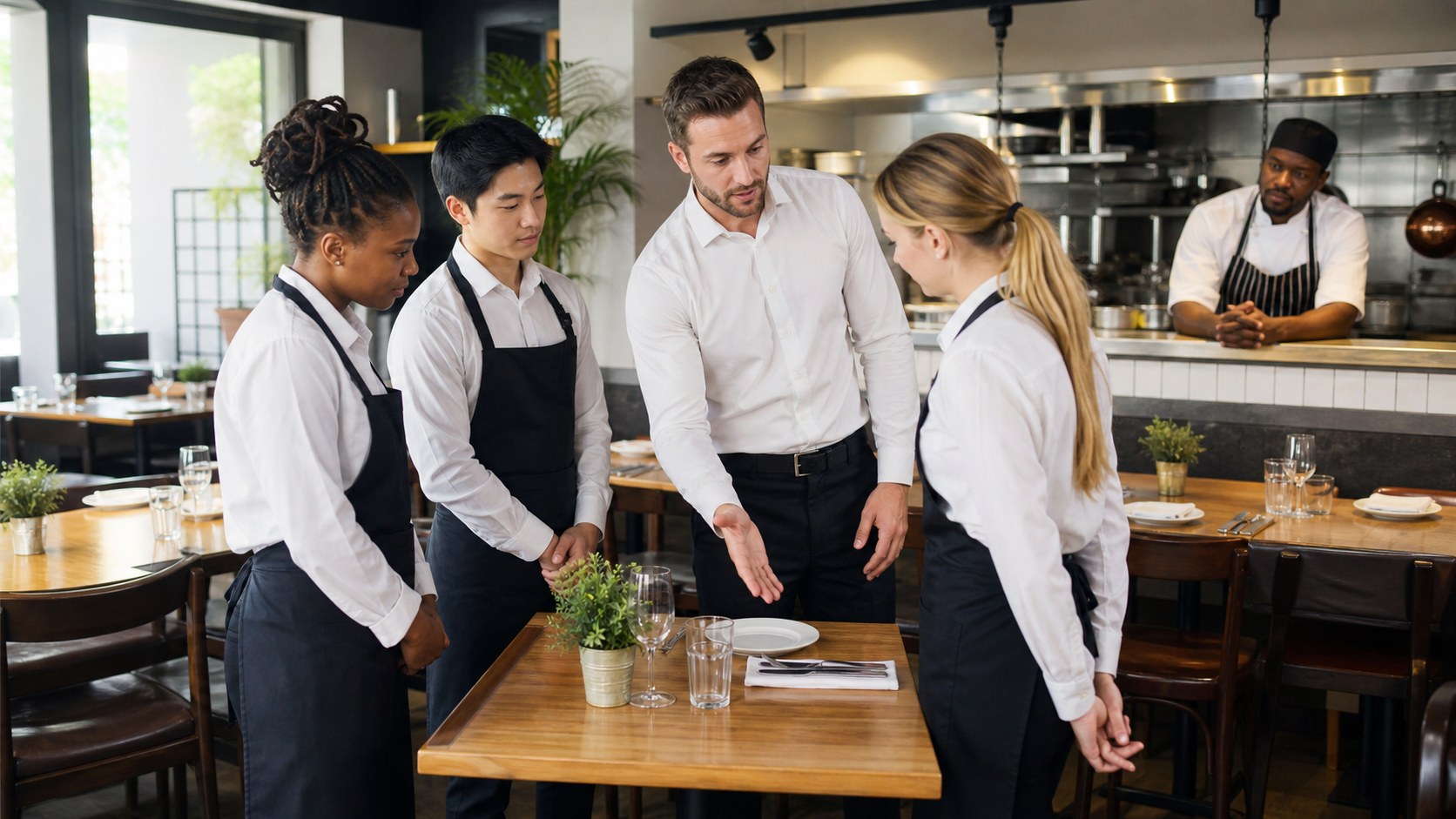
Micro-skill exchanges let staff teach one another something small. A cook might show how a garnish should look. A server might demonstrate a concise dish description. A bartender might explain a nonalcoholic pairing. A host might show how seating choices affect server pacing.
These exchanges build pride because employees are treated as experts in their own work. They also make standards more visible. The restaurant becomes less dependent on one manager repeating every detail.
Documentation can help, but it should not replace leadership. A checklist, training note, or written standard gives the team a reference point; the daily proof still comes from what managers notice, correct, praise, and follow up.
Managers should watch for unintended consequences. A rule meant to improve speed may create sloppy handoffs, while a rule meant to improve warmth may slow tables if staffing is too thin.
Avoid Forced Fun
Forced fun can make team building backfire. Mandatory games, embarrassing icebreakers, or alcohol-centered events may alienate employees who already feel tired or unseen. Staff can usually tell when an activity is designed to create the appearance of culture rather than fix a real issue.
A better test is simple: would this activity help the team serve better, communicate better, or trust one another more. If the answer is no, the activity may belong outside work or not at all.
Restaurants should also protect the emotional load of the work. Hospitality requires patience with guests, speed under pressure, and cooperation with people who may be equally tired. Strong systems reduce the amount of willpower staff need to spend just to get through service.
When the work feels more organized, employees have more room to be generous. That generosity is often what guests remember.
When the team improves, name the change plainly. Staff need to hear that their effort produced fewer guest complaints, smoother turns, faster recovery, or a calmer close.
Include the Whole Operation
Team building should not revolve only around servers and managers. Dish teams, prep cooks, hosts, runners, and bartenders all shape the guest experience. If they are left out, the restaurant reinforces the very hierarchy it may be trying to soften.
Inclusion requires scheduling thought. The dish team may not be available when servers are free. Prep cooks may leave before dinner. Managers should plan team-building moments around the actual operation rather than expecting everyone to absorb the inconvenience.
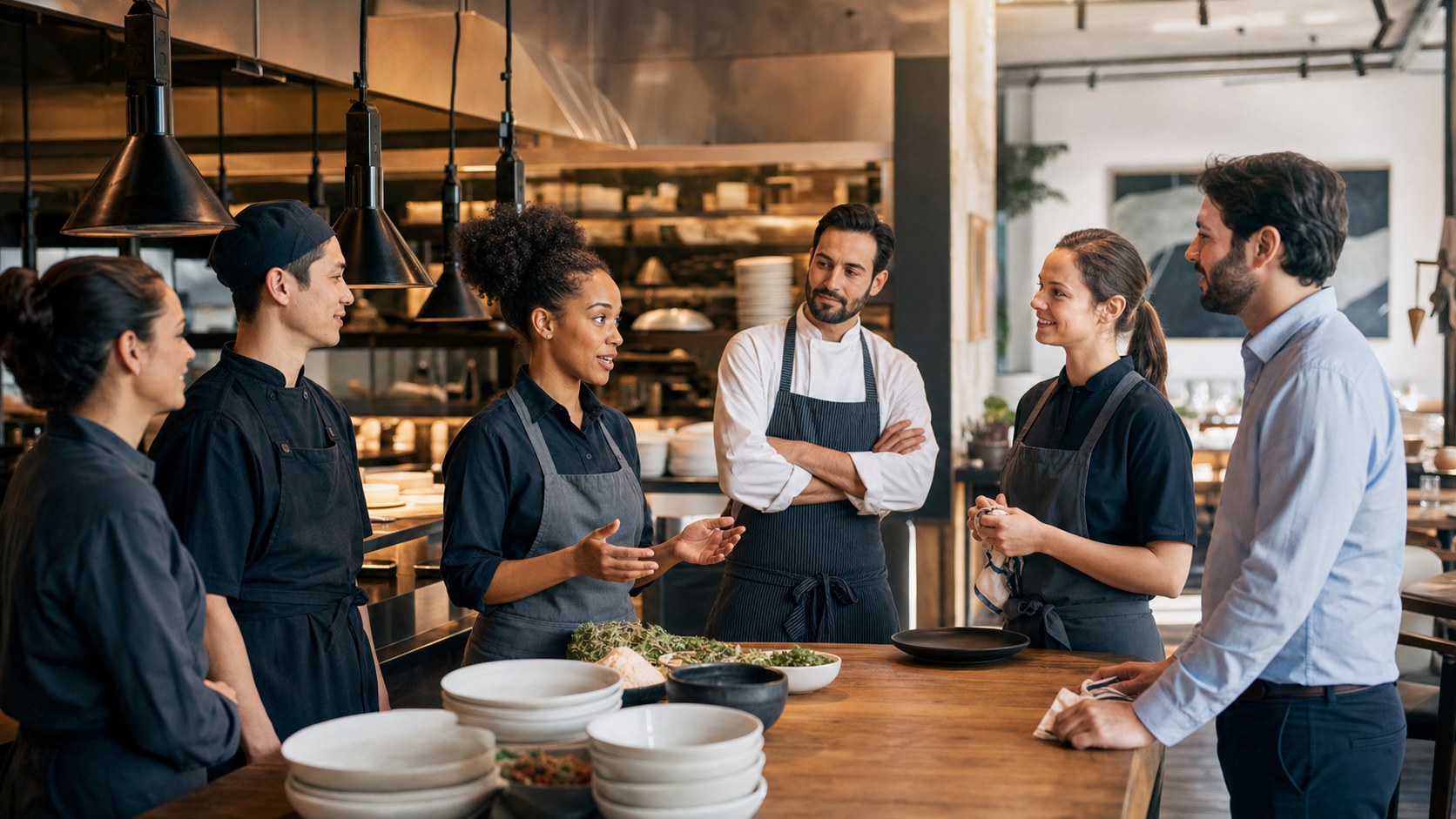
One helpful approach is to review the topic during a manager meeting and during a staff pre-shift. Managers can decide what they will enforce, while staff can explain where the standard might break down in real service.
The practice should also survive leadership changes. If only one manager understands it, the standard is fragile; if trainers and leads can explain it, the restaurant has a stronger foundation.
Debrief Quickly
A short debrief turns an activity into learning. Ask what the team noticed, what should change, and who owns the next step. Without that close, even a useful activity can disappear into the noise of service.
The debrief should not become a second meeting. Restaurant staff respond better when the takeaway is concrete. One new allergy handoff, one station reset standard, or one menu phrase can be enough.
Progress should be reviewed with evidence. Look for fewer repeated errors, cleaner handoffs, better guest comments, steadier training outcomes, and fewer avoidable conflicts. These signals show whether using restaurant team-building practices that strengthen trust, communication, skill sharing, and daily cooperation is becoming part of the operation.
If the evidence is weak, adjust the system rather than blaming the team immediately. A good restaurant learns from friction before it hardens into turnover.
Guest-facing results should be reviewed alongside staff-facing results. A policy that pleases guests while exhausting employees will not last, and a policy staff like must still support service.
Repeat Small Practices
The strongest team building is repeated in small pieces. A weekly tasting, a short cross-department observation, a service map after a major mistake, or a two-minute appreciation round can do more than a once-a-year outing. Repetition turns connection into habit.
Team building works when staff feel the difference on the floor. Fewer sharp comments, cleaner handoffs, faster recoveries, and more willingness to help are signs that the activity was worth the time.
The final measure is sustainability inside the workplace. A practice is valuable only if managers can keep teaching it, employees can keep using it, and guests benefit without the staff feeling squeezed by another unrealistic promise.
Over time, these habits compound. Restaurants rarely improve culture or retention through one dramatic fix; they improve because many small decisions begin pointing in the same direction.