Outdoor dining has transformed from a seasonal perk into a defining feature of modern restaurant success. Whether it’s a sidewalk café, rooftop terrace, garden patio, or beachfront lounge, the outdoor experience often becomes the first emotional touchpoint for customers. Before a guest even reads a menu, they’re already forming an opinion based on ambiance, layout, lighting, and overall design. In a world where social media drives discovery and word-of-mouth spreads instantly, a thoughtfully designed outdoor space can act as both a magnet and a marketing engine. Restaurants that invest in creative, functional, and visually compelling outdoor environments consistently attract more foot traffic, increase dwell time, and inspire repeat visits.
A: Comfort, visual appeal, shade, lighting, layout, and a welcoming atmosphere all play a major role.
A: Start with better lighting, comfortable seating, greenery, and stronger visual definition at the entrance.
A: Use layered lighting, quality materials, cohesive branding, lush plants, and intentional furniture arrangements.
A: Sometimes, but pergolas, retractable awnings, and mixed-cover solutions often provide better comfort and flexibility.
A: Very important—it adds softness, privacy, color, and a more finished guest experience.
A: Yes, the outdoor space should feel like an extension of the restaurant’s overall brand and mood.
A: Strong curb appeal, visible activity, warm lighting, and a stylish patio can all make a restaurant more inviting from the street.
A: Warm layered lighting usually works best, combining ambient glow with focused task and accent lighting.
A: Add heaters, wind barriers, blankets if appropriate, and partial enclosures without losing the open-air feel.
A: Because atmosphere influences dwell time, guest comfort, return visits, social sharing, and overall perceived value.
Creating a Cohesive Design Identity
A successful outdoor restaurant design begins with a strong identity. The outdoor area should feel like an extension of the brand rather than an afterthought. Whether your restaurant leans toward rustic charm, modern minimalism, industrial edge, or tropical escape, consistency is key.
Materials, colors, textures, and furniture should all align with your interior concept. A sleek, contemporary restaurant benefits from clean lines, neutral palettes, and structured seating, while a cozy bistro might lean into warm woods, layered textiles, and soft lighting. The goal is to create a seamless transition between indoor and outdoor spaces, ensuring guests feel immersed in a unified experience.
Design identity also plays a crucial role in memorability. Customers are far more likely to return—and share photos—when a space feels distinct and intentional.
Strategic Layouts That Maximize Flow and Comfort
Outdoor layouts must balance aesthetics with practicality. Unlike indoor spaces, outdoor environments face variables such as weather, noise, and spatial constraints. A well-designed layout ensures smooth movement for both guests and staff while maintaining a sense of intimacy. Spacing between tables is critical. Too tight, and guests feel crowded; too wide, and the atmosphere loses energy. The best layouts create natural pathways that guide movement without disrupting the dining experience.
Zoning is another powerful tool. Dividing the space into smaller sections—such as lounge seating, dining tables, and bar areas—adds variety and accommodates different customer preferences. Some guests seek a lively social atmosphere, while others prefer quiet, secluded corners. Layering the space with planters, partitions, or subtle level changes can enhance privacy without sacrificing openness.
Lighting That Transforms the Atmosphere
Lighting is one of the most powerful—and often underestimated—elements in outdoor restaurant design. As the sun sets, lighting becomes the defining feature that shapes mood and experience.
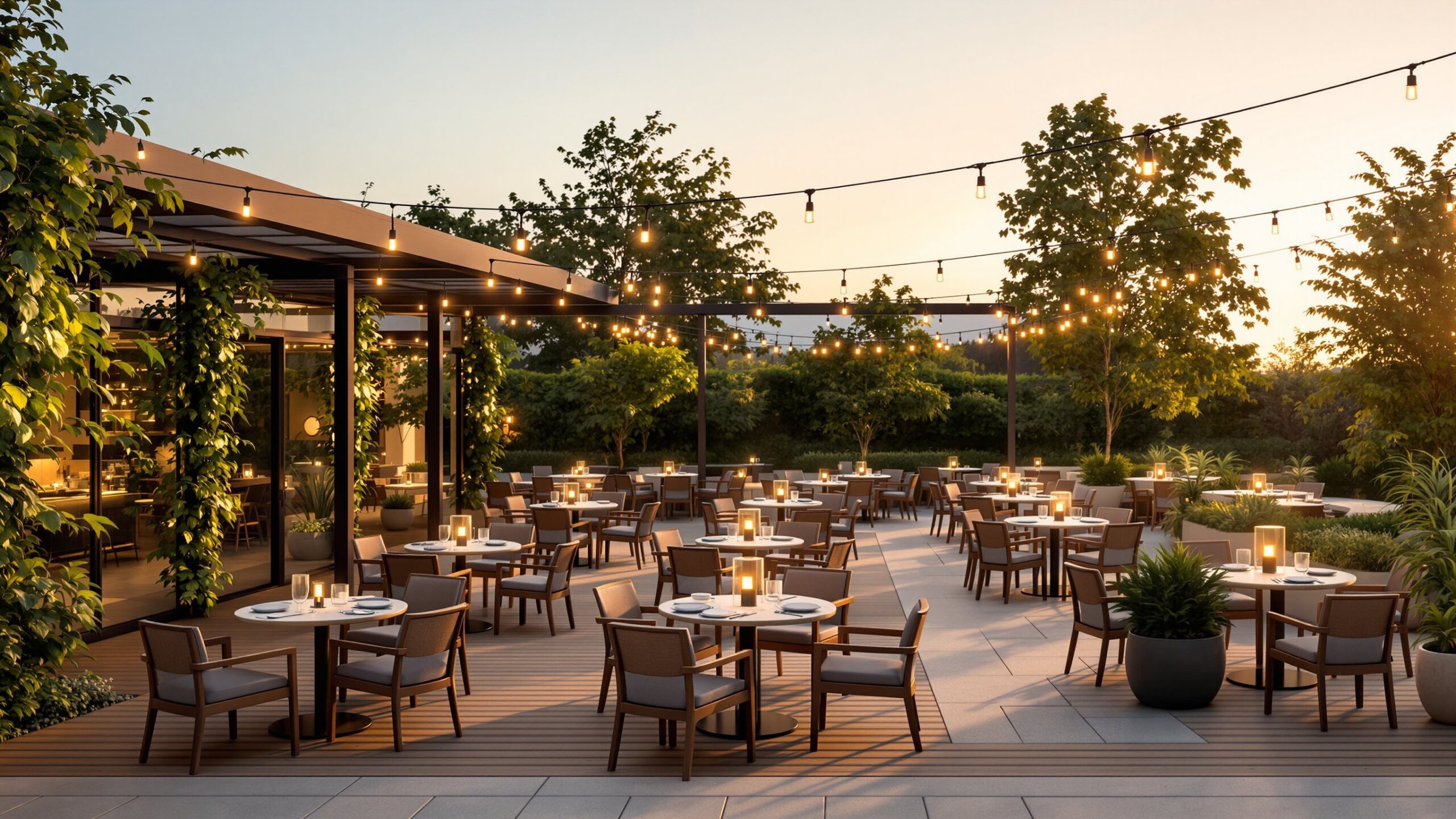
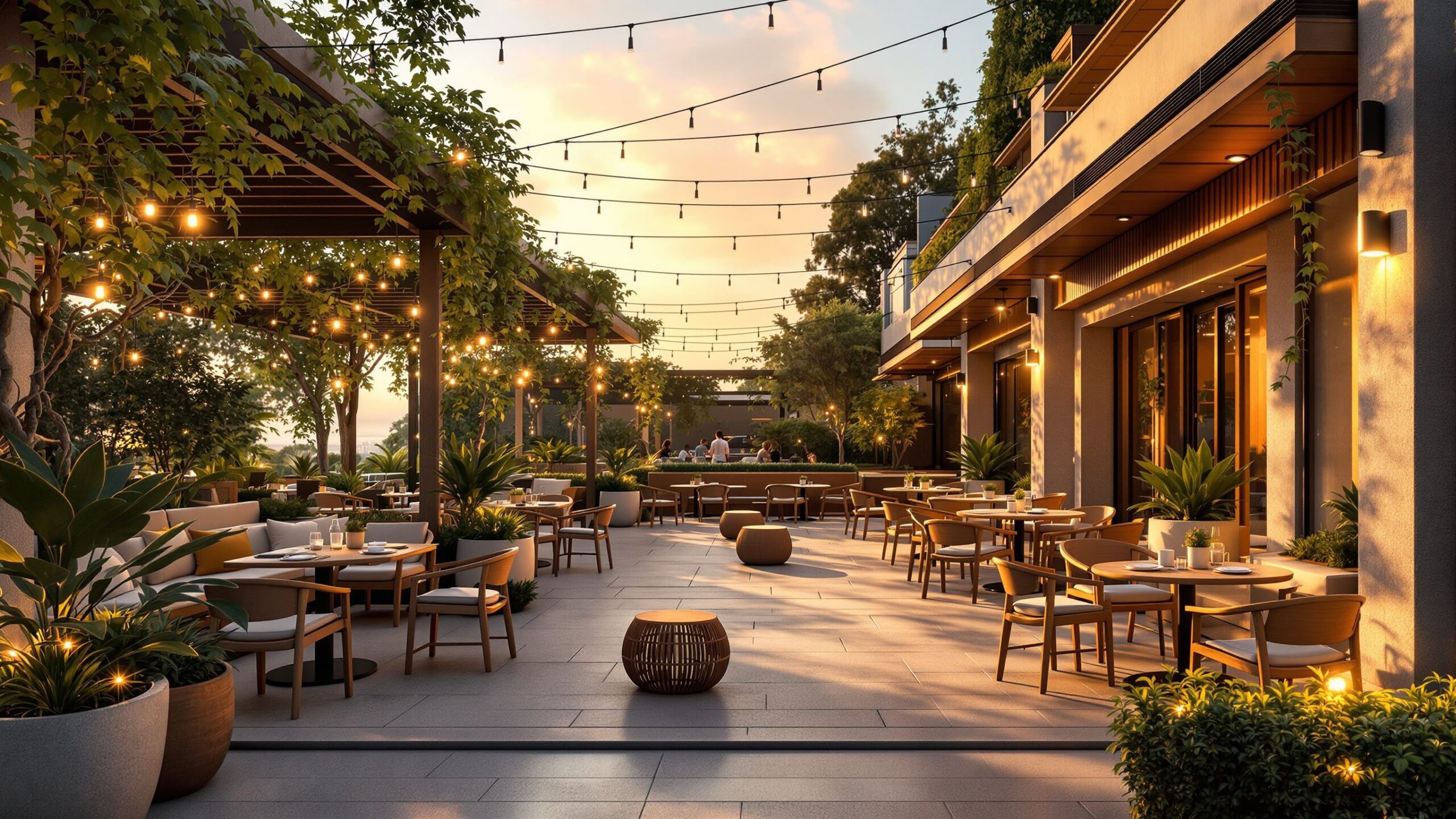
Warm, ambient lighting creates an inviting and relaxed atmosphere. String lights, lanterns, and softly glowing fixtures add charm and intimacy, while strategically placed accent lighting highlights architectural features, greenery, or focal points.
Layered lighting works best. Combining overhead lighting with table-level illumination and subtle ground lighting creates depth and visual interest. It also ensures functionality, allowing guests to comfortably read menus and dine without harsh glare.
Restaurants that master lighting design often see increased evening traffic, as the space becomes a destination rather than just an extension of daytime service.
Weather-Proofing Without Sacrificing Style
Outdoor spaces must be resilient. Weather conditions can change quickly, and a poorly prepared setup can disrupt service and deter customers. Incorporating adaptable features such as retractable awnings, pergolas, or umbrellas allows restaurants to maintain operations in varying conditions. These elements should blend seamlessly with the overall design rather than appear purely functional.
Heating solutions extend usability into cooler months. Fire pits, patio heaters, and built-in fireplaces not only provide warmth but also act as visual focal points that draw people in. Similarly, misting systems or shade structures can make hot climates more comfortable. The key is to integrate these solutions in a way that enhances the aesthetic rather than detracts from it.
Furniture That Balances Comfort and Durability
Furniture plays a dual role in outdoor restaurant design: it must be visually appealing while withstanding constant use and exposure to the elements.
Comfort is essential. Guests are more likely to stay longer—and spend more—when seating feels inviting. Cushioned chairs, ergonomic designs, and varied seating options (such as benches or lounge sofas) can elevate the experience.
At the same time, materials must be durable. Weather-resistant woods, powder-coated metals, and high-quality outdoor fabrics ensure longevity without compromising style.
Flexibility is another advantage. Modular furniture allows restaurants to easily reconfigure layouts for different group sizes or events, maximizing both functionality and revenue potential.
Greenery and Natural Elements That Enhance Experience
Bringing nature into the design is one of the most effective ways to elevate an outdoor dining space. Plants, trees, and natural materials create a sense of calm and authenticity that resonates with customers.
Vertical gardens, hanging planters, and lush borders can soften hard surfaces and add depth to the environment. Even in urban settings, incorporating greenery can transform a space into a refreshing escape from the surrounding city.
Natural elements also improve perceived air quality and comfort. Shaded areas beneath trees or pergolas covered in vines provide relief from the sun while enhancing visual appeal.
When thoughtfully integrated, greenery becomes more than decoration—it becomes part of the dining experience.
Creating Instagram-Worthy Moments
In today’s digital landscape, design and marketing are deeply intertwined. Outdoor restaurant spaces that photograph well naturally attract attention online, turning customers into brand ambassadors. Unique features such as statement walls, artistic installations, or visually striking seating arrangements encourage guests to take photos. Even small details—like beautifully plated dishes against a scenic backdrop—can make a big impact.
Color palettes, lighting, and composition all contribute to shareability. Spaces that feel curated and visually cohesive are more likely to appear in social feeds, increasing visibility and attracting new customers. Designing with photography in mind doesn’t mean sacrificing authenticity—it simply means recognizing the power of visual storytelling.
Sound and Acoustics in Open-Air Spaces
While often overlooked, sound plays a critical role in shaping the dining experience. Outdoor environments can introduce challenges such as traffic noise, wind, or echoes.
Strategic design choices can mitigate these issues. Installing sound-absorbing materials, using water features to mask unwanted noise, or incorporating soft furnishings can improve acoustics.
Music selection also contributes to atmosphere. The right playlist enhances mood and reinforces brand identity, whether it’s upbeat and energetic or calm and relaxing.
A well-balanced soundscape ensures that conversations flow easily and guests feel comfortable lingering.
Flexible Spaces for Events and Seasonal Adaptation
Outdoor restaurant areas can serve multiple purposes beyond everyday dining. Designing with flexibility in mind allows spaces to host events, private parties, or seasonal experiences. Movable partitions, adjustable seating arrangements, and multi-functional areas enable quick transformations. A daytime café can become an evening cocktail lounge, while a standard patio can host live music or themed events.
Seasonal decor and design updates keep the space fresh and engaging. Simple changes—such as switching textiles, adding seasonal plants, or adjusting lighting—can create a new atmosphere without major renovations. This adaptability not only enhances customer interest but also maximizes revenue opportunities throughout the year.
Incorporating Technology Seamlessly
Modern outdoor dining increasingly benefits from integrated technology. From digital ordering systems to outdoor-friendly POS setups, technology can streamline operations and improve customer experience.
Wireless charging stations, discreet speakers, and smart lighting systems add convenience without overwhelming the design. The key is subtle integration—technology should enhance the experience without becoming the focal point.
Restaurants that embrace innovation while maintaining a human-centered design often stand out in competitive markets.
Accessibility and Inclusivity in Design
An inviting outdoor space is one that welcomes everyone. Accessibility should be a fundamental consideration in layout and design. Wide pathways, step-free access, and comfortable seating options ensure that all guests can navigate and enjoy the space. Thoughtful design also considers varying group sizes, from solo diners to large gatherings. Inclusivity extends beyond physical accessibility. Creating a welcoming atmosphere through design, lighting, and layout encourages diverse audiences to feel comfortable and valued.
The Psychology of Comfort and Stay Time
Great outdoor restaurant design isn’t just about aesthetics—it’s about how people feel within the space. Comfort directly influences how long guests stay, which in turn impacts revenue.
Elements such as temperature control, seating comfort, lighting warmth, and spatial layout all contribute to psychological ease. When guests feel relaxed and engaged, they’re more likely to order additional items, linger longer, and return in the future.
Designing for comfort means anticipating needs before they arise, creating an environment that feels effortless and enjoyable.
Sustainability as a Design Advantage
Sustainable design is no longer optional—it’s a competitive advantage. Customers increasingly value eco-friendly practices, and outdoor spaces offer unique opportunities to showcase them.
Using reclaimed materials, energy-efficient lighting, and native plants not only reduces environmental impact but also enhances authenticity. Water-saving irrigation systems and solar-powered features further reinforce a commitment to sustainability.
These choices resonate with modern consumers, adding depth to the brand story and attracting environmentally conscious diners.
Bringing It All Together
Outdoor restaurant design is a dynamic blend of creativity, functionality, and strategy. It’s about crafting an experience that begins the moment a customer approaches the space and continues long after they leave. From cohesive design identity and thoughtful layouts to atmospheric lighting and natural elements, every detail contributes to the overall impression. The most successful outdoor spaces don’t just accommodate guests—they captivate them. In an increasingly competitive dining landscape, investing in outdoor design is one of the most powerful ways to stand out. When done right, it transforms a restaurant into a destination—one that customers seek out, share, and return to again and again.