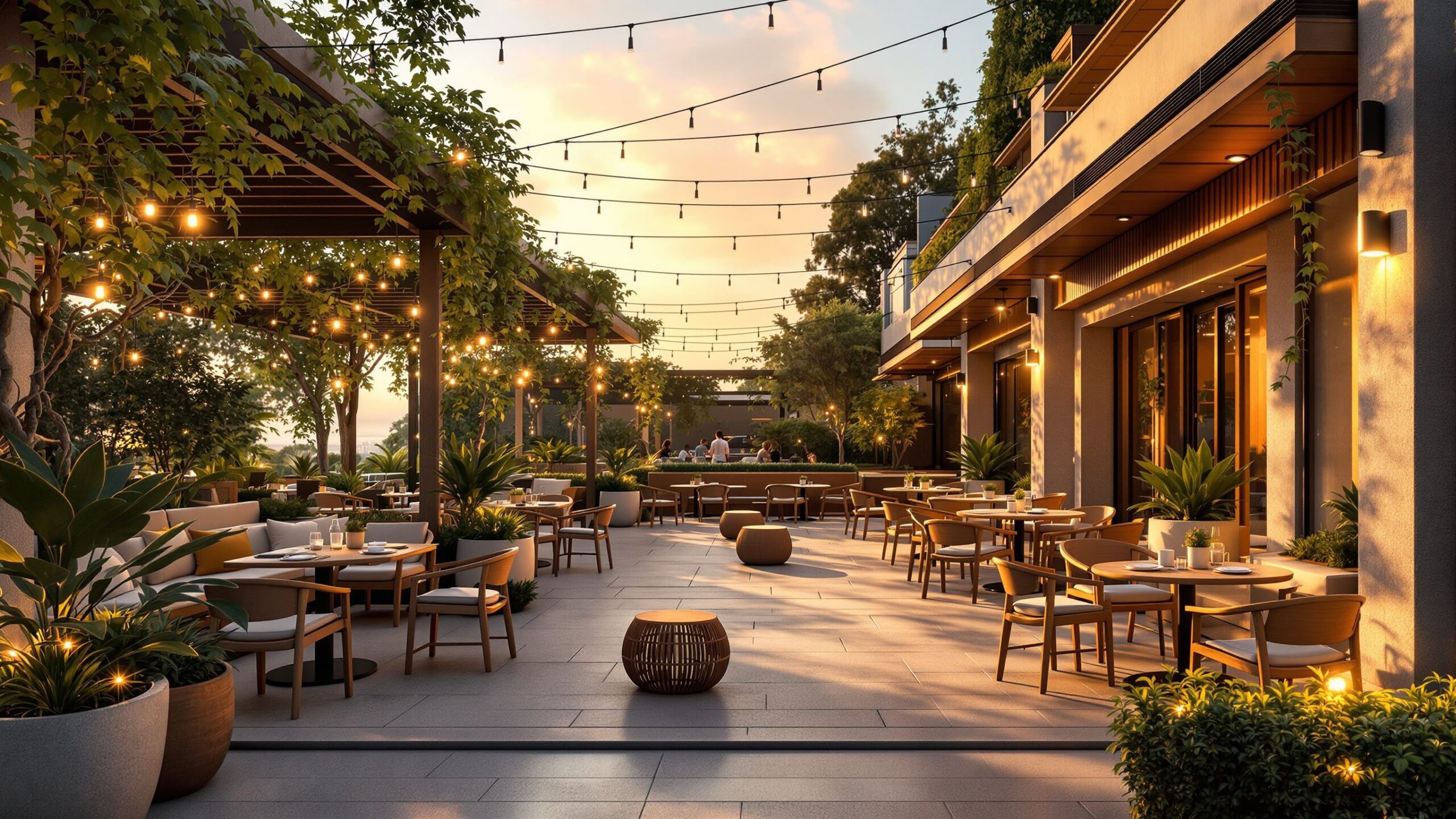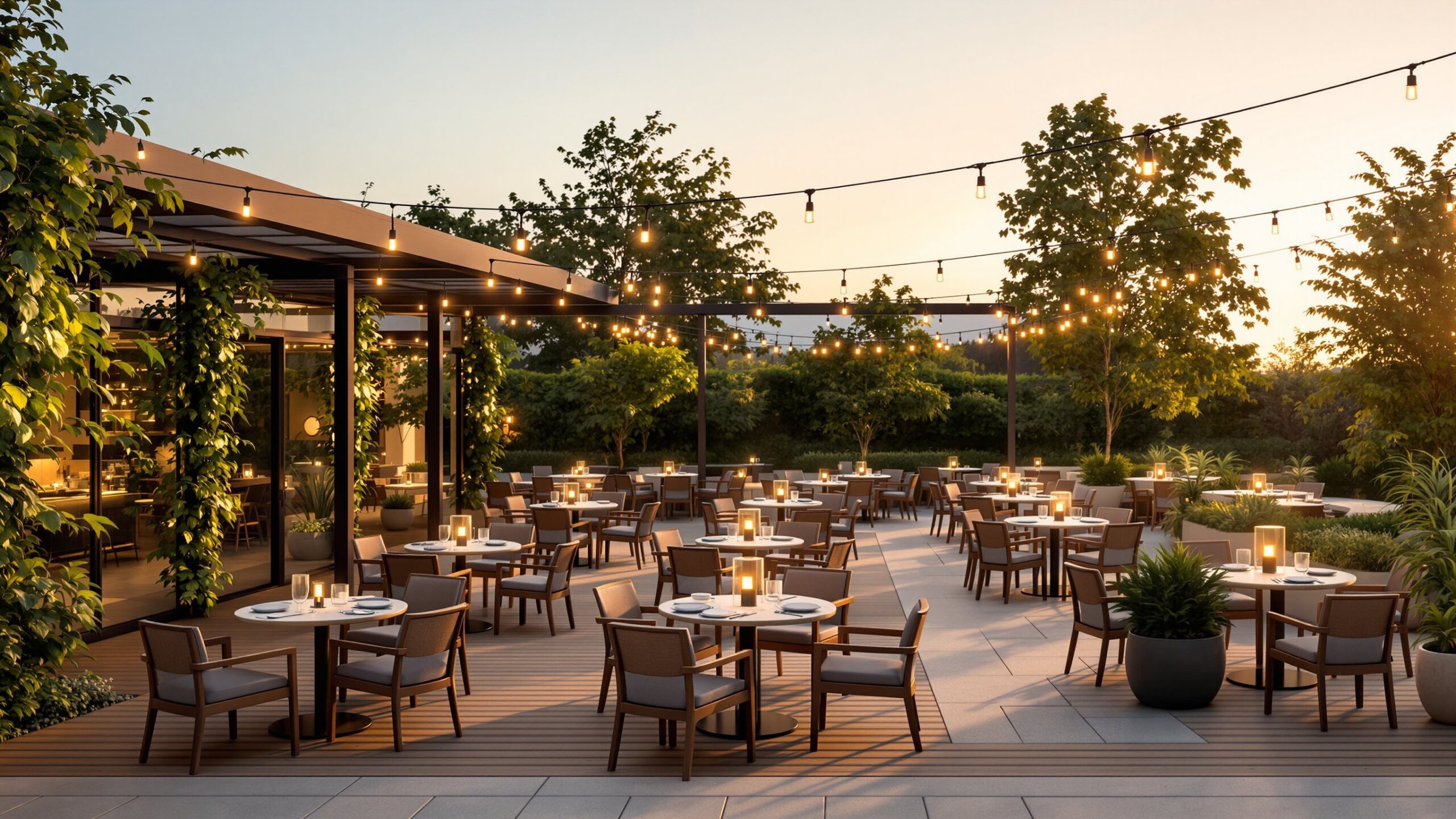
Outdoor dining has evolved from a seasonal perk into a defining feature of modern restaurants. A well-designed patio is no longer just extra seating—it’s an experience, a visual identity, and a revenue driver all in one. When executed thoughtfully, restaurant patio design can attract more guests, extend operating hours, and create an atmosphere that keeps customers returning again and again. From spatial layout to lighting design and weather protection, every element contributes to how a patio feels, functions, and performs. This guide explores how to design a restaurant patio that is both visually compelling and operationally efficient, blending creativity with practicality to deliver a space that thrives year-round.
A: Clear circulation, comfortable spacing, flexible seating, and defined zones all help the patio feel smooth and welcoming.
A: Layered lighting works best, combining ambient glow, pathway illumination, and decorative accents for mood and function.
A: Use a mix of shade structures, retractable covers, heaters, wind screens, and proper drainage.
A: They help with sun and light rain, but larger patios often need stronger solutions like pergolas, awnings, or covered sections.
A: There should be enough room for guest comfort and server access, with spacing that avoids crowding and chair collisions.
A: Durable, slip-resistant materials like pavers, textured concrete, or outdoor-rated tile are common choices.
A: Warm lighting, layered fixtures, soft textures, greenery, and intimate seating arrangements all help.
A: Yes, especially when combined with wind protection and strategic seating placement.
A: Plants soften the space, add privacy, improve ambiance, and help the patio feel more immersive.
A: Focusing only on appearance without planning for comfort, weather, staff movement, and long-term durability.
The Power of Outdoor Dining Experiences
Dining outdoors taps into something instinctive. Fresh air, natural light, and open space create a sense of relaxation that indoor environments often struggle to replicate. For restaurants, this translates into longer visits, higher spending, and stronger emotional connections with guests.
A well-designed patio can also serve as a powerful branding tool. Whether it’s a sleek urban rooftop, a cozy garden courtyard, or a vibrant sidewalk café, the patio becomes a visual extension of the restaurant’s personality. It’s often the first thing passersby notice, making it a key factor in attracting spontaneous walk-ins.
In competitive dining markets, a standout patio can be the difference between blending in and becoming a destination.
Designing the Perfect Patio Layout
The foundation of any successful restaurant patio begins with its layout. This is where aesthetics meet logistics, and where thoughtful planning ensures both guest comfort and operational efficiency.
A strong layout starts with understanding flow. Guests should be able to move easily through the space without feeling cramped, while servers need clear pathways to deliver food quickly and safely. The goal is to create a balance between maximizing seating capacity and maintaining an open, breathable atmosphere.
Zoning is another essential consideration. Dividing the patio into distinct areas can enhance the guest experience. Intimate two-top tables near the edges provide privacy for couples, while larger communal tables in central areas encourage group gatherings. Lounge-style seating can introduce a more relaxed vibe, ideal for drinks and extended stays.
The relationship between indoor and outdoor spaces also matters. Seamless transitions, such as wide sliding doors or consistent flooring materials, help unify the experience. When guests move from inside to outside, it should feel like a natural extension rather than a separate environment.
Finally, orientation plays a critical role. Understanding how sunlight moves across the patio throughout the day allows you to position seating strategically, ensuring comfort during peak dining hours.
Space Planning and Seating Strategies
Effective seating design goes beyond simply placing tables and chairs. It involves creating a rhythm within the space that feels intuitive and inviting.
Spacing between tables should strike a balance between privacy and capacity. Too close, and guests feel crowded; too far apart, and the patio loses energy. Thoughtful spacing allows for comfortable conversations while maintaining a lively atmosphere.
Flexibility is key. Modular furniture that can be rearranged easily allows the patio to adapt to different group sizes and service styles. Stackable or foldable pieces can be invaluable for seasonal adjustments or special events.
Material selection also impacts both aesthetics and durability. Outdoor furniture must withstand sun exposure, moisture, and temperature fluctuations without losing its visual appeal. Materials like powder-coated metal, treated wood, and weather-resistant fabrics offer both resilience and style.
Accessibility should never be overlooked. Pathways must accommodate all guests, including those with mobility needs, ensuring that the patio is welcoming and inclusive.
Creating Visual Flow and Atmosphere
A successful patio design guides the eye and creates a sense of harmony. Visual flow is achieved through consistent design elements, such as color palettes, materials, and architectural features. Layering textures can add depth and interest. Combining natural elements like wood and stone with softer materials such as cushions and textiles creates a balanced, inviting environment. Greenery plays a particularly important role, softening hard edges and bringing life to the space.
Focal points help anchor the design. A central fire feature, a statement wall, or a unique installation can draw attention and create a memorable impression. These elements also provide opportunities for social media engagement, encouraging guests to share their experience online. Lighting, which we will explore in more detail later, also contributes to visual flow by highlighting key areas and creating transitions between zones.
The Art of Outdoor Lighting Design
Lighting is one of the most transformative elements of restaurant patio design. It has the power to shape mood, influence behavior, and extend the usability of the space well into the evening.
A layered lighting approach is essential. Ambient lighting provides overall illumination, ensuring that guests can navigate the space comfortably. This might include overhead string lights, wall-mounted fixtures, or integrated architectural lighting.
Task lighting focuses on functionality. Tables should be well-lit enough for guests to read menus and enjoy their meals without straining their eyes. Subtle table lamps or low-level lighting can achieve this without overpowering the ambiance.
Accent lighting adds drama and depth. Highlighting plants, architectural features, or decorative elements creates visual interest and enhances the overall atmosphere.
Color temperature plays a crucial role in setting the tone. Warm lighting tends to create a cozy, intimate environment, while cooler tones can feel more modern and energetic. For most dining settings, warmer hues are preferred as they flatter both food and people.
Dimming capabilities allow for flexibility, enabling the patio to transition seamlessly from daytime brightness to evening intimacy.
Statement Lighting and Brand Identity
Beyond functionality, lighting can serve as a signature design element. Unique fixtures, artistic installations, or custom-designed lighting features can become defining aspects of the patio’s identity. Pendant lights over communal tables, lantern-style fixtures in garden settings, or sleek LED strips in contemporary spaces all contribute to a cohesive visual narrative. These elements not only enhance the guest experience but also reinforce the restaurant’s brand. In today’s social media-driven world, visually striking lighting can encourage guests to capture and share their experience, effectively turning your patio into a marketing tool.
Weather Solutions for Year-Round Comfort
One of the biggest challenges in outdoor dining is managing the elements. Weather can be unpredictable, but thoughtful design can mitigate its impact and extend the usability of the patio throughout the year.
Shade solutions are essential for daytime comfort. Umbrellas, pergolas, and retractable awnings provide protection from direct sunlight while adding architectural interest. Adjustable options allow for flexibility as the sun’s position changes.
Rain protection is equally important. Covered areas, waterproof materials, and proper drainage systems ensure that the patio remains functional even during inclement weather. Transparent roofing options can provide shelter without sacrificing natural light.
Wind management often requires creative solutions. Strategic placement of screens, planters, or glass barriers can reduce wind exposure while maintaining an open feel.
Heating elements make outdoor dining viable in cooler temperatures. Options range from portable heaters to integrated systems that provide consistent warmth. Fire pits and fireplaces not only offer heat but also serve as focal points that enhance ambiance.
Cooling solutions are vital in warmer climates. Misting systems, fans, and shaded areas help maintain a comfortable environment during hot weather.
Seasonal Adaptability and Flexibility
Designing a patio that adapts to changing seasons is key to maximizing its potential. Flexibility should be built into the design from the start. Retractable features, such as roofs or walls, allow the space to transform quickly in response to weather conditions. Modular furniture and movable elements enable reconfiguration for different seasons or events.
Decor can also play a role in seasonal transitions. Lightweight textiles, interchangeable cushions, and adaptable lighting can refresh the look of the patio without significant investment. By embracing adaptability, restaurants can ensure that their patios remain inviting and functional year-round.
Integrating Technology into Patio Design
Modern patio design increasingly incorporates technology to enhance both guest experience and operational efficiency.
Smart lighting systems allow for precise control over brightness and color, enabling dynamic adjustments throughout the day. Integrated sound systems can create a consistent auditory experience without overwhelming conversation.
Heating and cooling systems can be automated, ensuring optimal comfort with minimal manual intervention. Even ordering and payment systems can be integrated seamlessly into the patio environment, reducing wait times and improving service flow.
Technology, when used thoughtfully, enhances the experience without detracting from the natural charm of outdoor dining.
Sustainability in Outdoor Spaces
Sustainability is becoming a central consideration in restaurant design, and patios are no exception. Eco-friendly materials, energy-efficient lighting, and water-conscious landscaping can all contribute to a more sustainable operation.
Using locally sourced materials reduces environmental impact while adding authenticity to the design. Solar-powered lighting and energy-efficient heaters can lower operating costs and appeal to environmentally conscious customers.
Greenery not only enhances aesthetics but also contributes to environmental benefits. Plants can provide natural shade, improve air quality, and create a more pleasant microclimate.
Sustainable design is not just a trend—it’s an investment in the future of both the business and the environment.
Enhancing Guest Experience Through Design
Ultimately, every design decision should be guided by the guest experience. Comfort, ambiance, and functionality all contribute to how guests perceive and enjoy the space. Acoustics play an often-overlooked role. Outdoor spaces can amplify noise, so incorporating elements that absorb or diffuse sound can improve the overall atmosphere.
Privacy is another important factor. Strategic placement of plants, screens, or partitions can create a sense of intimacy without isolating guests completely.
Attention to detail sets exceptional patios apart. From the texture of the seating to the quality of the lighting, every element contributes to the overall impression. When guests feel comfortable and engaged, they are more likely to stay longer, spend more, and return in the future.
Designing for Business Success
While aesthetics are important, patio design must also support business goals. Efficient layouts, durable materials, and adaptable features all contribute to long-term success.
Maximizing seating capacity without compromising comfort can significantly impact revenue. Thoughtful design ensures that every square foot is used effectively.
Durability reduces maintenance costs and ensures that the patio remains visually appealing over time. Investing in high-quality materials and construction pays off in the long run.
Flexibility allows the space to accommodate different types of events, from casual dining to private gatherings, expanding revenue opportunities.
The Future of Restaurant Patio Design
As dining preferences continue to evolve, restaurant patios will play an increasingly important role in the industry. Guests are seeking experiences that go beyond the meal itself, and outdoor spaces offer a unique opportunity to deliver on that expectation.
Design trends are moving toward more immersive environments, blending nature with technology to create dynamic, engaging spaces. Biophilic design, which emphasizes a connection to nature, is becoming more prominent, as is the integration of smart systems that enhance comfort and convenience.
The most successful patios will be those that balance innovation with authenticity, creating spaces that feel both cutting-edge and welcoming.
Crafting a Patio That Stands Out
Restaurant patio design is both an art and a science. It requires a deep understanding of how space, light, and environment interact to shape the guest experience. By focusing on thoughtful layout, layered lighting, and effective weather solutions, restaurants can create outdoor spaces that are not only beautiful but also highly functional. These patios become more than just dining areas—they become destinations. In a world where experiences matter more than ever, a well-designed patio can set a restaurant apart, turning every meal into a memorable occasion and every visit into a reason to return.