Secret Food Spots You’ll Only Discover Through Locals
Secret food spots you will only discover through locals are usually not invisible. They are hidden in plain sight because the signs are subtle, the hours are odd, the location is ordinary, or the restaurant serves a community before it serves search traffic. Locals notice these places because they move through the neighborhood repeatedly. Visitors can find them too, but only when they trade checklist dining for conversation, patience, and observation.
Local Knowledge Is Built Over Time
A local does not know a secret food spot because they solved a puzzle once. They know it because they passed the same corner for years, watched a counter survive slow seasons, ordered the same soup when sick, or learned which cook works which day. That repetition creates a kind of dining intelligence no app can fully replace.
Visitors can borrow that intelligence when they ask better questions and accept the answer with humility. The goal is not to extract a private map. It is to understand how people who live in a place actually eat when the meal is not being staged for visitors.
Where Secret Spots Hide
Secret food spots often hide inside ordinary containers: a grocery store stall, a bakery back counter, a gas-station kitchen, a lunch-only cafe in an office district, a seafood shack behind a market, or a family restaurant in a strip mall. Their power comes from focus. They may not offer polished hospitality, but they know exactly what they are cooking and for whom.
Look for places whose customers seem to understand the system before they reach the counter. They know the sauce, the pickup rhythm, the best table, or the item that runs out. Those small rituals are local knowledge in motion.
How to Ask Without Being Awkward
The best questions make it easy for someone to help. Instead of asking for a secret, ask for context. Say you are looking for a great neighborhood lunch, a regional dish, a bakery worth crossing town for, or a place that feels loved by regulars. Specificity lets people choose well.
Do not argue with the recommendation when it sounds plain. Many great local food spots do not announce themselves with dramatic language. If someone says the chicken plate is the thing, or the soup is only good before noon, take that detail seriously.
Use Markets as Listening Posts
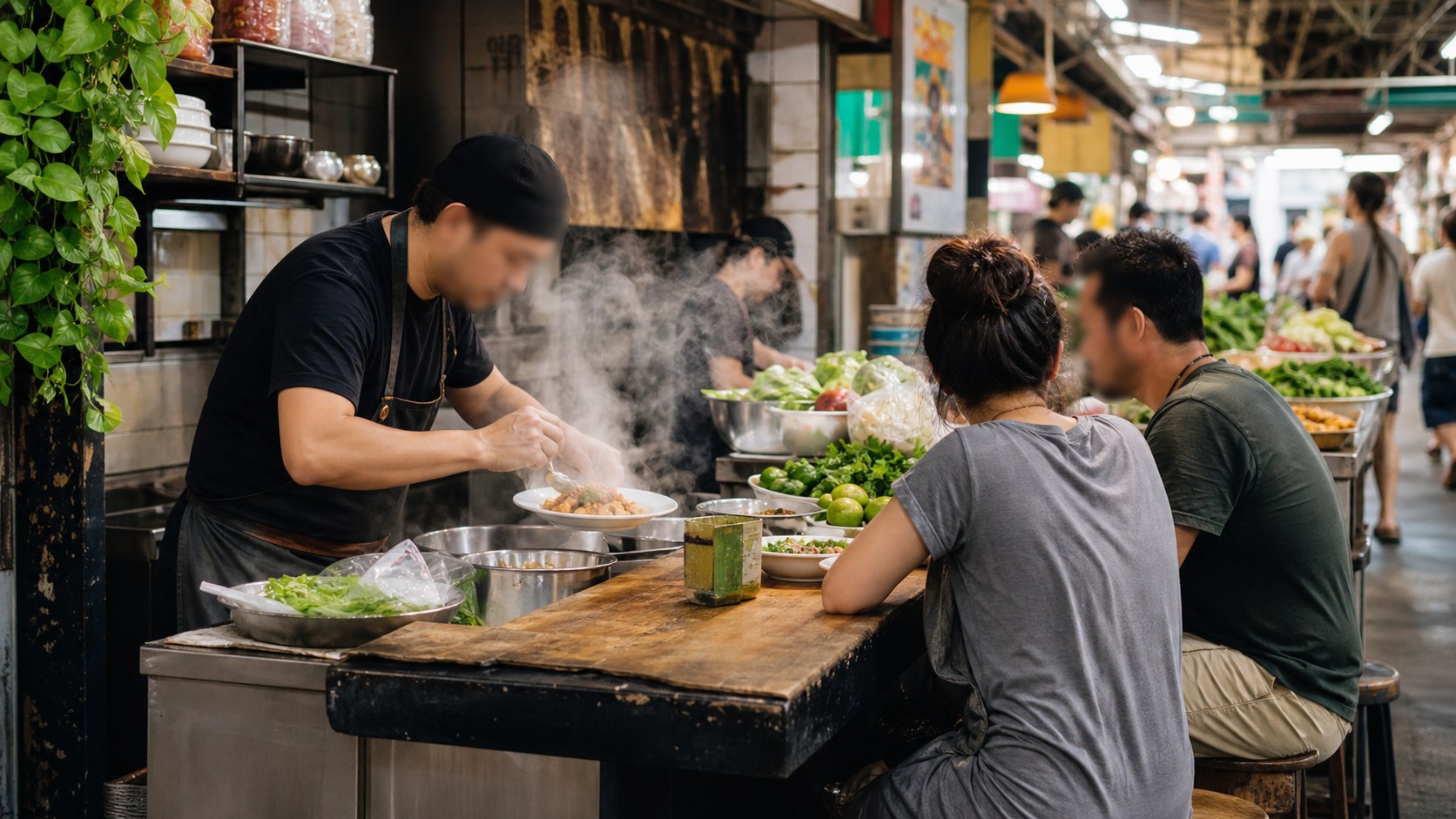
Markets are natural discovery engines. Specialty grocers know which restaurants buy ingredients. Fishmongers hear which kitchens care about freshness. Bakers know who orders bread. Customers chat in line. A market visit can lead to a meal that would never appear on a broad top-ten list.
This works especially well in cities with strong immigrant communities. A restaurant may be one node in a web of food businesses, and the surrounding shops help you read it. When the same regional ingredients appear in stores, menus, and home-cooking conversations, you are closer to the real food life of the neighborhood.
Let Timing Do Some of the Work
Locals know timing because they have learned it the hard way. They know when the stew is ready, when the bakery still has the good tray, when the lunch line is bearable, and when a tiny restaurant gets overrun. Ask about timing as often as you ask about names.
A secret spot can disappoint if you arrive at the wrong hour. Some kitchens are strongest early, some late, and some only on certain days. Local advice often includes these invisible instructions. Follow them and the meal changes.
Respect the Gift
When someone sends you to a place they love, treat it as a gift. Spend fairly, be patient, and avoid barging in with the entitlement that can make locals stop sharing. If the restaurant is small, do not arrive with a huge group unless you know it can handle one. If the dish takes time, let it take time.
Afterward, close the loop. Tell the person what you ordered and what you appreciated. That response turns a recommendation into a conversation, and conversations are how better food trails form.
The Real Secret
The secret is rarely just the address. It is the habit of noticing. Once you learn to ask thoughtful questions, read neighborhood patterns, and respect the places you enter, secret food spots become less accidental. You will still need luck, but you will be the kind of diner luck can find.
Why Algorithms Miss the Good Stuff
Search tools are built to reward visibility. They favor restaurants with many reviews, strong photo activity, searchable names, and consistent digital information. Secret food spots often have the opposite profile. They may be listed under an old business name, operate inside another shop, rely on phone orders, or serve a dish that regulars know without needing to search for it.
Algorithms also struggle with context. A market counter may be perfect at 11 a.m. and disappointing at 3 p.m. A bakery may sell the best item only on weekends. A family kitchen may change its strongest dish by season. Locals carry those instructions in memory, and that memory is often the difference between a decent stop and a remarkable one.
Turning One Tip Into a Trail
When a local gives you one food spot, do not treat it as the end of the search. Treat it as the first marker on a trail. Look around the block. Notice where customers go afterward, which shops share ingredients, and whether another counter nearby is busy with the same community. Food neighborhoods often work as clusters, and one good recommendation can unlock several meals.
Ask follow-up questions after you eat. A restaurant owner may point you toward a bakery, a grocer may mention a weekend stand, or another diner may tell you which day has the best special. This is how local discovery becomes layered. You are not collecting isolated addresses; you are learning a pattern.
Reading Specificity in a Recommendation
The strongest recommendations usually include constraints. Go before noon. Order the lamb, not the chicken. Sit at the counter. Call ahead for the stew. Skip weekends unless you like lines. These details might sound fussy, but they often come from experience. Locals know when a place shines because they have also seen it under stress.
A vague recommendation can still be useful, but ask for one more detail. What should I order? When is it best? Who would love it? What should I not expect? The answers help you avoid forcing the restaurant into the wrong occasion.
Keeping Curiosity Practical
Curiosity works best when paired with logistics. Carry some cash, check hours twice, understand transit or parking, and have a backup in the same area. Secret food spots can be informal, and informal does not always mean convenient. Prepared diners enjoy the adventure without making their lack of planning the restaurant’s problem.
Practicality also protects your mood. If a counter is closed, a dish is sold out, or the room is full, you can keep moving. The search remains enjoyable because you expected real life to intervene.
How Local Food Knowledge Changes Travel
Once you start finding food through locals, a city becomes less like a set of attractions and more like a lived place. You notice work schedules, school routes, market days, religious holidays, late-night habits, and family routines. Food becomes a doorway into the ordinary systems that make a city itself.
That is why these meals often feel richer than famous reservations. They carry the pleasure of being let into a rhythm, even briefly. You may still be a visitor, but you are no longer eating entirely from the outside.
Leave the Door Open
The best local discovery does not end with one meal. Save the neighborhood, the dish, and the person who gave the tip. Return when you can. Send appreciative friends. Keep asking better questions. Over time, secret food spots stop being random surprises and become part of the way you understand cities.
That ongoing attention is the real reward. A single hidden counter can teach you how to see markets, side streets, and quiet rooms differently. After that, every city feels a little more edible.
Let the Recommendation Shape the Day
A local tip works best when you let it influence the rest of the day. If someone sends you to a market counter, build time to explore the market. If they mention a bakery near a park, walk the neighborhood instead of rushing back to the hotel. If they say a dish sells out early, reorder your schedule around that clue. The recommendation is not just a meal; it is a set of instructions for seeing the area properly.
This flexibility is where many travelers stumble. They want local discovery, but only if it fits neatly between fixed attractions. Secret food spots rarely behave that way. They reward diners who can move a little, wait a little, and let the city interrupt the plan.
Know When the Story Is Yours to Tell
After a great local discovery, it is tempting to announce it loudly. Sometimes that is helpful. A small business may need new customers, and a thoughtful recommendation can bring the right ones. Other times, the better move is quieter: send a friend who will love it, leave a fair review, or simply return when you are nearby.
The question is whether your sharing serves the restaurant. If your post makes the place sound like a challenge, a secret club, or a backdrop, reconsider. If it explains the food, the service style, the best time to go, and the kind of diner who will appreciate it, you are contributing something useful.
Make Local Discovery a Two-Way Exchange
The most satisfying food conversations are reciprocal. If someone gives you a good tip, offer one of your own from another city, another neighborhood, or another cuisine. Food people remember diners who listen well and share generously. Over time, this creates a network of recommendations that feels human rather than extracted.
That exchange changes the emotional texture of travel. You stop feeling like a consumer moving through anonymous options and start feeling like a participant in a chain of appetite, memory, and care. That is when secret food spots become more than places on a map.
Practice Makes the City More Generous
The more you practice local discovery, the easier it becomes to recognize generous clues. You notice which recommendations include lived detail, which rooms have a rhythm, and which menus show real specificity. You also become less anxious about missing out, because every city has more than one good answer. That confidence makes meals calmer, kinder, and usually better.
Let the Meal Change Your Map
A strong local tip can change how you understand an entire district. After one good counter or bakery, nearby streets stop looking like background and start looking like possibilities. That shift is valuable because it makes future discovery easier. You are no longer hunting secrets from scratch; you are learning how the neighborhood speaks through food. The next good meal becomes easier to recognize.